Automated lines depend on speed, consistency and controlled movement. The same qualities that make them productive can also create hazards if people need to inspect, clean, reset or maintain equipment close to moving parts.
Good machine guarding is not about shutting people out. It is about designing safe, practical access so staff can do their work without reaching into danger zones or bypassing protection.
Access should be designed into the guarding from the start
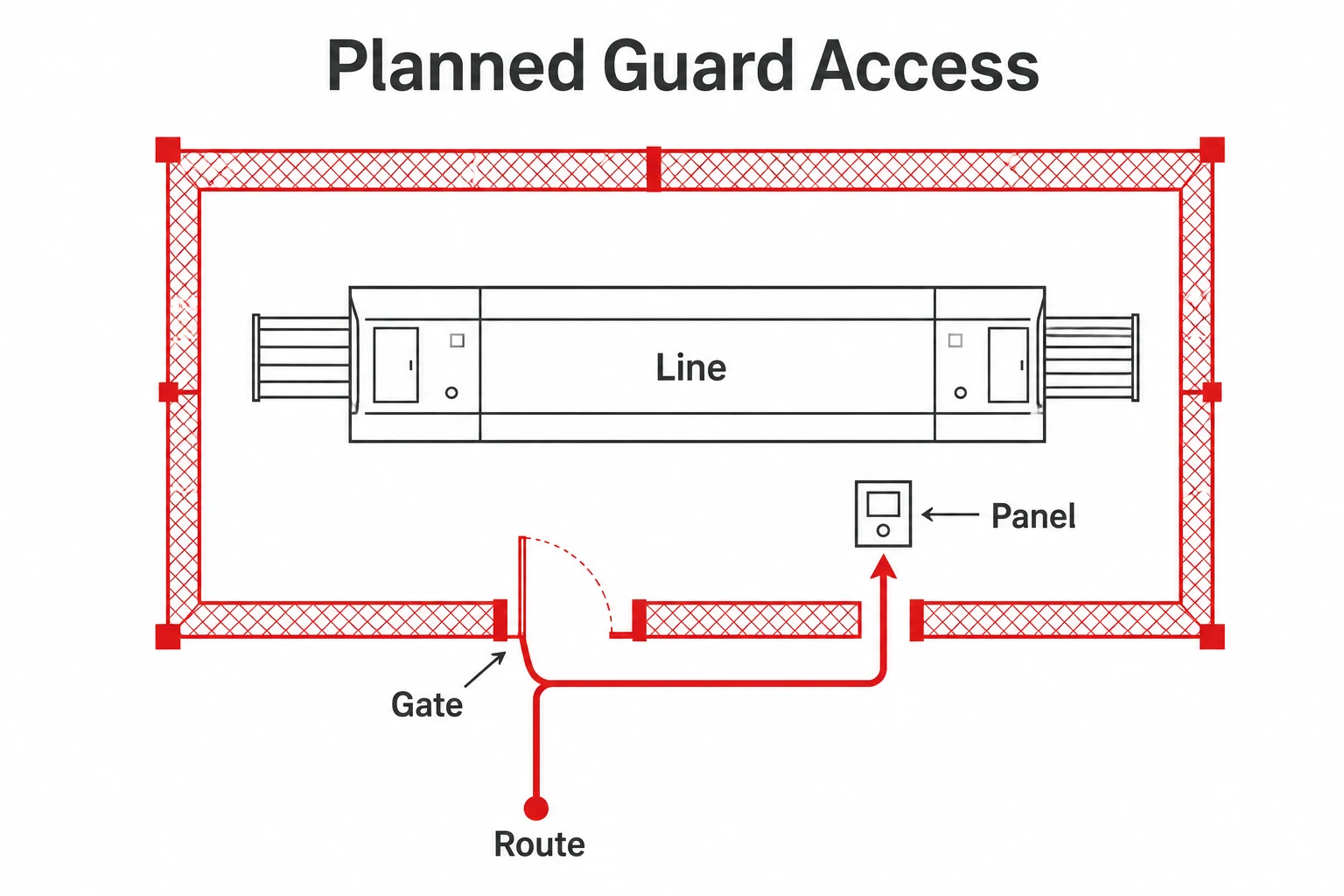
The best guarding layouts begin with a clear look at how the line is actually used. That means understanding routine operation, product changeovers, visual checks, cleaning tasks, fault finding, lubrication, tool changes and planned maintenance. Each task may need a different type of access, and each access point needs to be controlled in a way that suits the level of risk.
A fixed mesh panel may be right where access is rare. A hinged gate with suitable interlocking may be better where trained staff need regular entry. Removable panels can be useful for occasional engineering work, provided they are secured properly and cannot be removed casually by unauthorised people.
This is where a designed system has a real advantage over improvised guarding. A properly specified layout can protect conveyors, robots, transfer systems, packing machinery and other automated equipment while still leaving clear routes for authorised staff. For a deeper look at the service itself, Billington Safety Systems provides machinery guards for industrial equipment and automated lines.
Visibility matters as much as physical separation
Automation guarding is often judged only by whether it prevents access to dangerous movement. That is essential, but it is not the only design consideration. Staff also need to see what is happening inside the guarded area.
Good visibility helps operators spot jams, product build up, incorrect feeding, wear, leaks, loose components and unexpected behaviour before a minor issue becomes a stoppage. Mesh guarding, framed panels and transparent viewing sections can all support safer observation when selected for the task and environment.
Visibility also reduces the temptation to open gates unnecessarily. If staff can inspect the line from outside the hazard area, they can make better decisions before any controlled access is required. That helps keep guarding part of the normal workflow, rather than something people feel they need to work around.
The aim is not simply to meet a minimum barrier requirement. It is to create machine safety guards that fit the real working pattern of the line, support supervision and make safe behaviour the easiest option.
Gates, interlocks and procedures need to work together
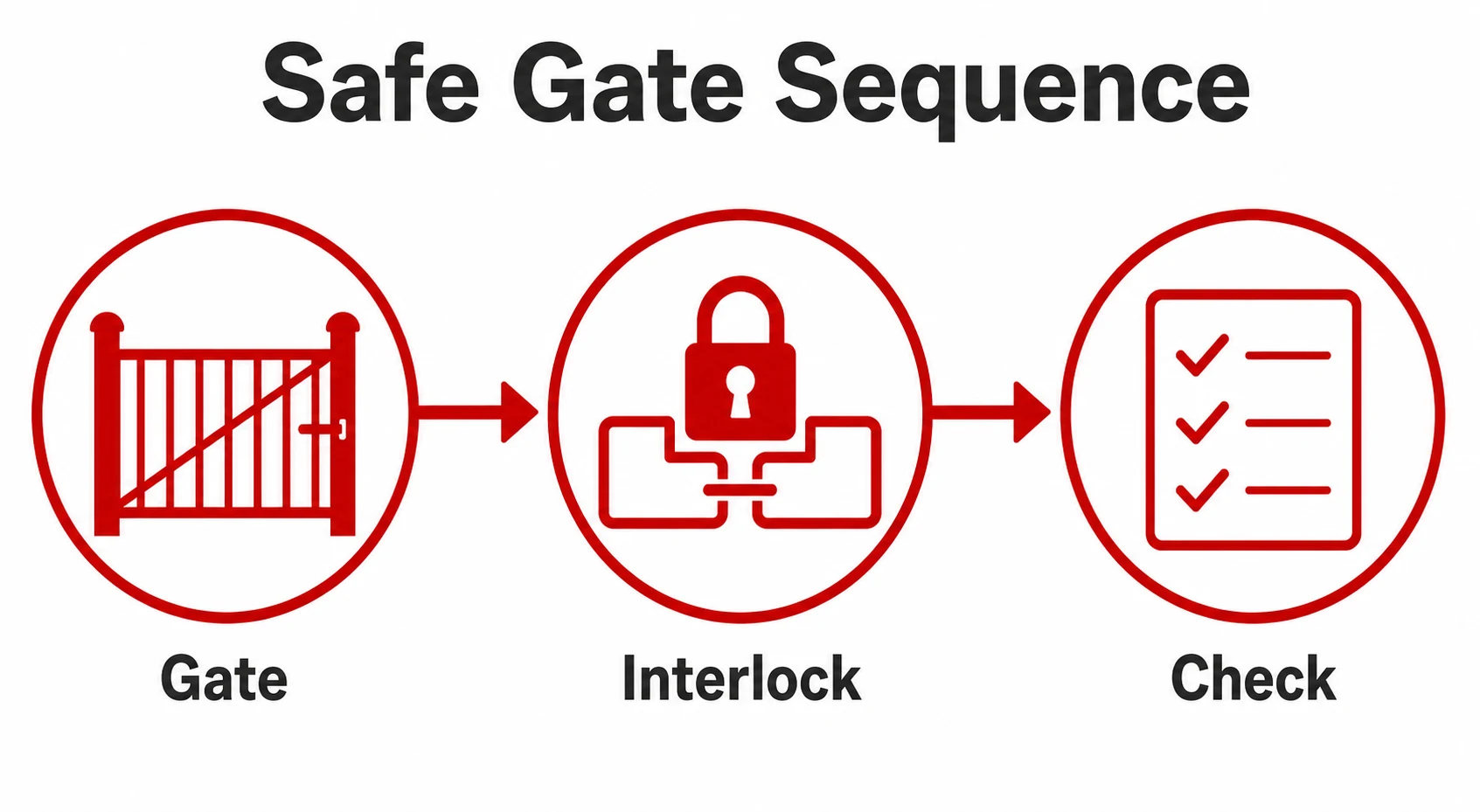
Where staff must enter a guarded area, the access system needs to be appropriate for the machinery and the task. Gates are often the most visible part of the design, but they are only one part of a wider safety approach.
Depending on the equipment, access may involve interlocked gates, trapped key systems, emergency stop provision, isolation procedures, reset controls and clear responsibility for who may enter and when. The right arrangement depends on the hazards present, the stopping time of the machinery, the need for stored energy control and the way maintenance teams work.
A common mistake is treating access as an afterthought. If a gate is placed in the wrong position, staff may still need to stretch, climb or carry tools through awkward spaces. If the access route is too narrow, cleaning and maintenance become more difficult than they need to be. If the reset point is poorly considered, there may be uncertainty before restarting.
For higher risk applications involving robots or hazardous machinery, it can help to review examples of robot and hazardous machinery guarding, where controlled access and clear separation are especially important.
Cleaning and maintenance access should be practical, not improvised
Cleaning and maintenance are where poor guarding design often shows itself. A line might be well protected during normal running, but awkward access can create pressure to remove panels, defeat switches or use informal shortcuts. The right design reduces that pressure by making planned tasks straightforward.
Useful questions include:
- Which parts of the line need daily, weekly or occasional cleaning?
- Can build up be inspected from outside the guarded area?
- Do maintenance staff need tool access, lifting access or room to replace components?
- Can guards be opened or removed in a controlled way without damaging the system?
- Is there enough space for safe posture, safe handling and clear communication?
Aluminium profile systems can be particularly useful where layouts need clean framing, modular panels and carefully positioned access points. For facilities reviewing this type of structure, Billington has also covered aluminium profile guarding and machine safety fencing.
Practical access does not weaken safety. When designed well, it supports it. Staff are more likely to follow procedures when the guarding has been built around the tasks they genuinely need to complete.
Guarding should support production flow
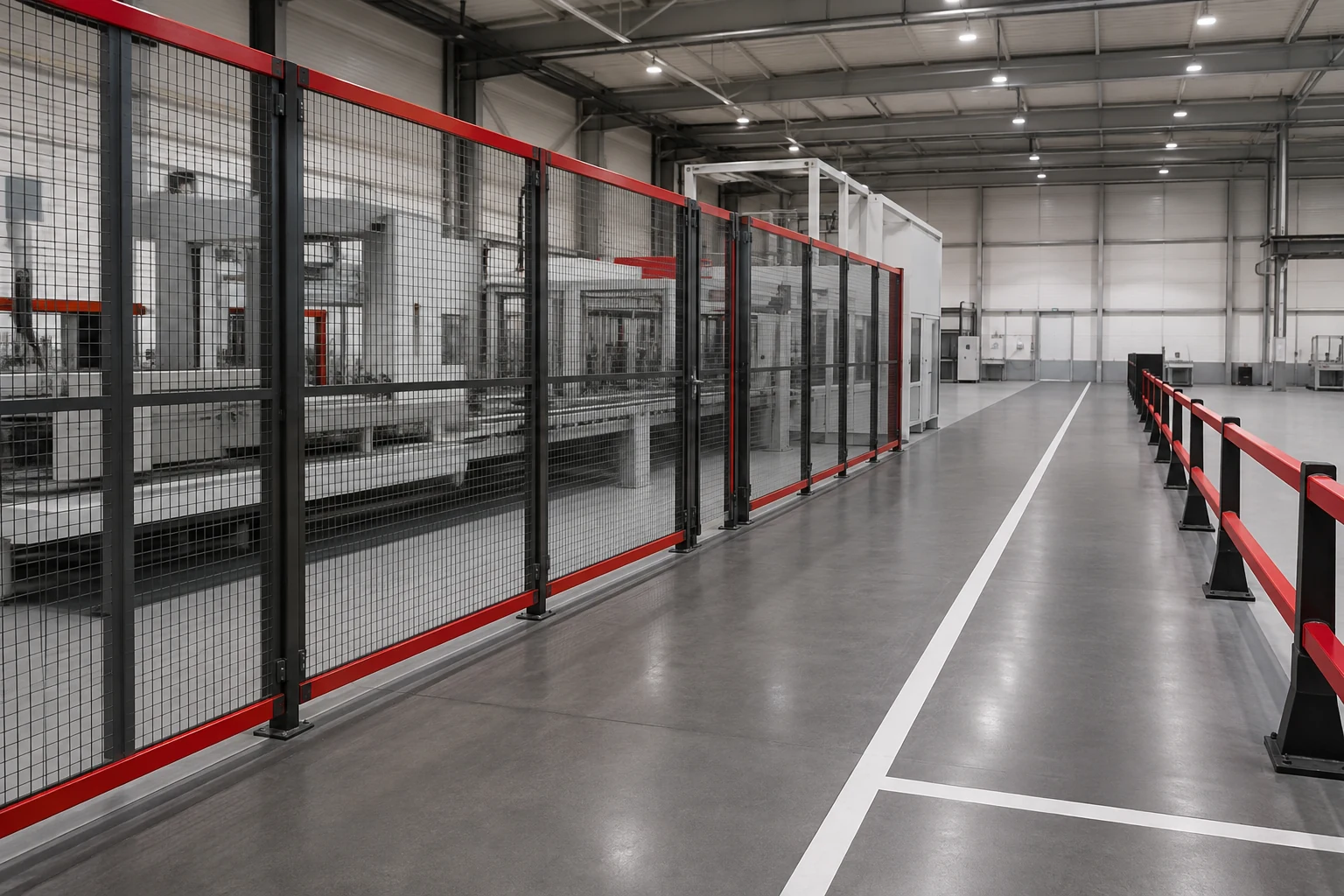
Automated lines are usually designed around rhythm. Products move through loading, processing, checking, transfer, packing or storage stages, often with people working nearby. Guarding should protect the hazardous parts of that process without interrupting the safe parts.
That may mean using different guarding types along the same line. Fixed panels can protect areas where access is not needed. Gates can serve defined entry points. Barriers can separate pedestrian routes from equipment movement. Mesh enclosures can protect larger zones while keeping the process visible. Platforms and gantries may be needed where inspection or maintenance happens above floor level.
The important point is that machine guarding should follow the logic of the workplace. It should help people understand where they can stand, where they can pass, where they need authorisation and where machinery movement must be stopped before entry.
Good automation guarding systems UK businesses can rely on are usually the result of close attention to detail. Panel sizes, gate swing, latch position, floor fixing, emergency access, cleaning reach and future modifications all matter. Small design choices can make the difference between a guard that is tolerated and a guard that becomes a trusted part of the line.
Regular review keeps guarding useful over time
Automated lines rarely stay exactly the same forever. New products, new tooling, revised processes, extra conveyors, layout changes and updated working practices can all affect how guarding performs. A system that suited the original installation may need adjustment as the line develops.
Regular inspection helps identify damaged panels, loose fixings, worn hinges, misaligned gates, missing fasteners, altered access routes or changes in how staff use the equipment. It also provides an opportunity to check whether guarding still supports current cleaning and maintenance tasks.
Reviews should involve the people who operate, clean and maintain the line. They often know where access is awkward, where visibility is limited and where a small improvement would make safe working easier. That feedback is valuable when planning modifications or future guarding projects.
Billington has more guidance on regular machine guarding inspections, including why checks should be treated as part of ongoing safety management rather than a one time exercise.
- Effective guarding protects people from hazardous movement while still allowing controlled access for authorised tasks.
- Access points should be planned around real inspection, cleaning, reset and maintenance routines.
- Visibility helps staff monitor automated equipment without opening guards unnecessarily.
- Gates, interlocks, isolation and procedures must work as one clear system.
- Regular reviews help guarding stay practical as automated lines change.
Frequently asked questions
Can machine guarding still allow fast maintenance access?
Yes. Well designed guarding can include controlled gates, removable sections and planned access points so maintenance teams can reach the right areas safely and efficiently.
Is mesh guarding suitable for automated lines?
Mesh guarding is often suitable because it provides physical separation while allowing visibility. The exact specification depends on the machinery, hazard distance and access needs.
Do all access gates need interlocks?
Not always. The need for interlocking depends on the risk, the machinery, stopping time and how the gate will be used. A suitable risk assessment should guide the choice.
When should existing automation guarding be reviewed?
Guarding should be reviewed when machinery, layouts, products or working methods change, and as part of routine inspection to check condition and continued suitability.
Plan safer access around your automated line
If you are reviewing machine guarding for automated equipment, Billington Safety Systems can help you think through protection, visibility and practical access from the same starting point.