Industrial guarding has to do more than form a barrier. It needs to protect people, fit around real machinery, allow the right access and remain practical when production areas evolve.
That is where aluminium profile frames are especially useful. They give modular guarding a clean structural framework that can be specified around equipment, panels, doors and future layout changes without losing the discipline of a properly planned safety system.
What makes aluminium profile suitable for guarding
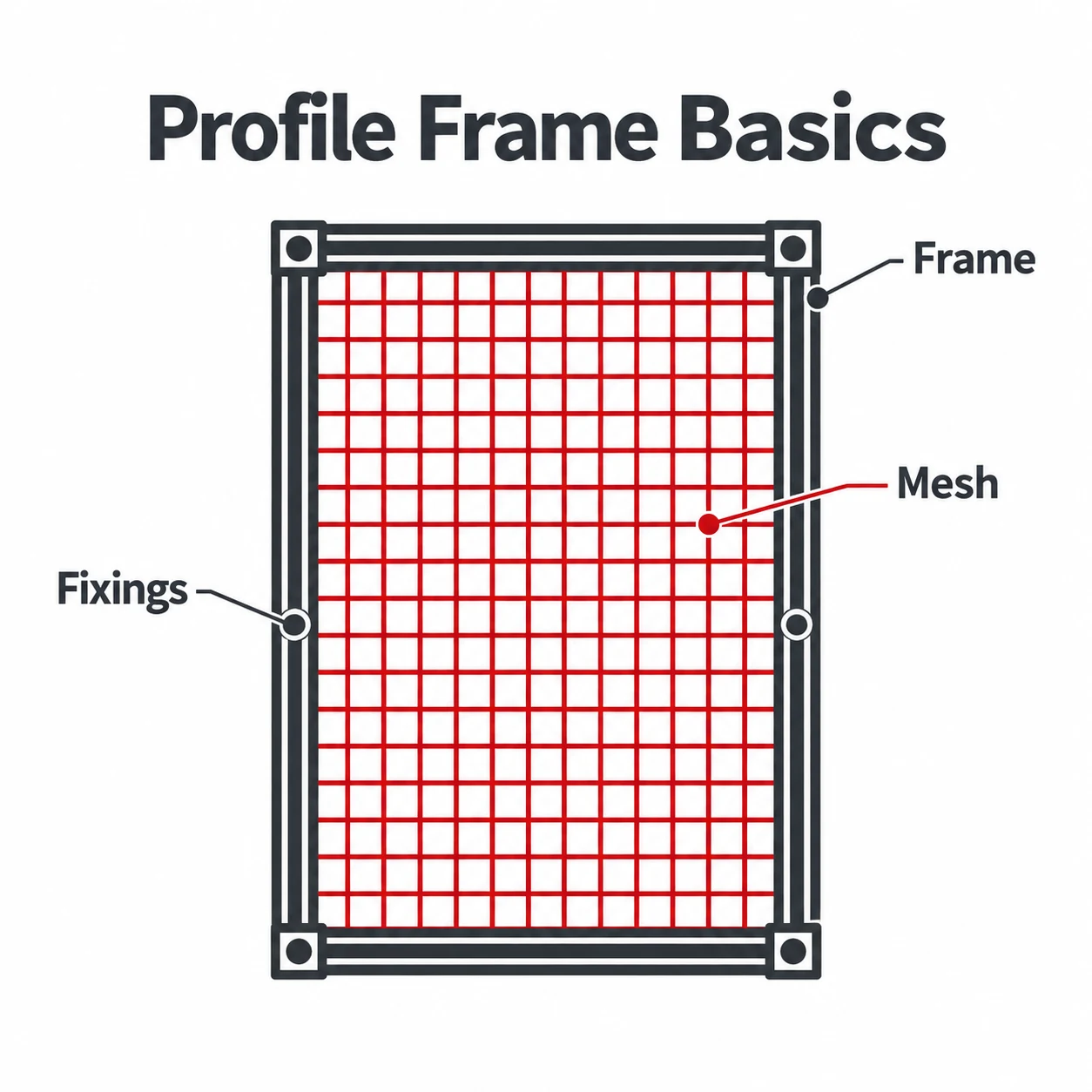
Aluminium profile is a useful framework for modular guarding because it combines strength, neat assembly and layout flexibility. The profiles form the main structure, while brackets, fixings and panel options allow the system to be built around the machine rather than forcing the machine area to suit a fixed guard format.
That matters in real industrial spaces. A guard may need to follow a machine footprint, allow clear viewing, support mesh or solid infill, or include doors and hatches in exact positions. A profile system gives designers a structured way to create that layout, with clean lines and repeatable components.
Billington Safety Systems describes its aluminium profile guarding systems as flexible and stable fencing that can use different profile sizes, shaped brackets and a choice of infill panels. In practical terms, the frame can be planned around the hazard, the workflow and the space available.
Modular guarding needs a framework that can adapt
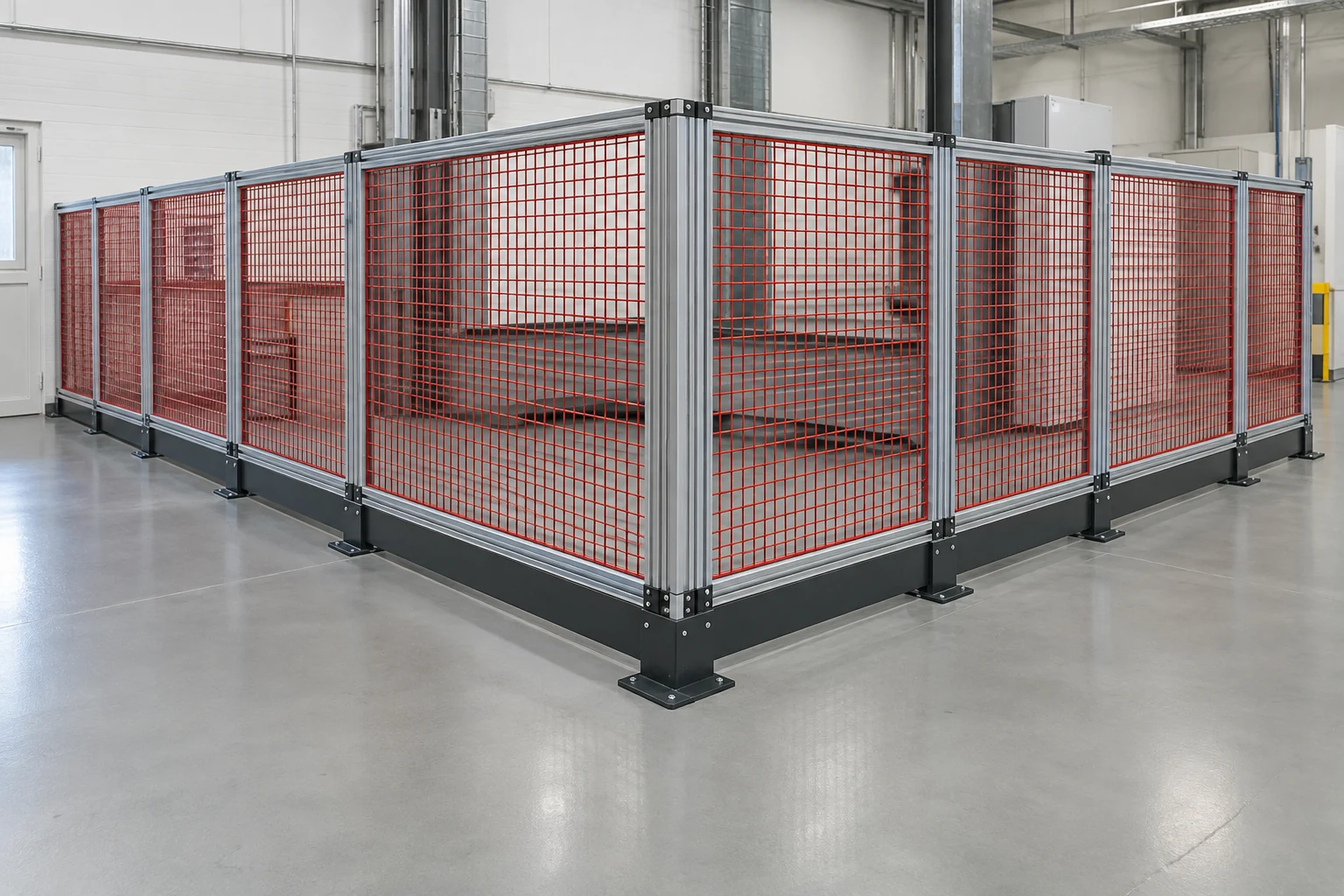
Production areas rarely stay exactly the same forever. Machinery may be upgraded, operator routines may change, access points may move, and guarding may need to join neatly with barriers, mesh cages or work platforms. A modular frame helps the guarding keep pace with those changes.
With aluminium profile, the guard can be designed as a set of connected elements rather than one fixed piece. Panels, posts, doors and brackets can be specified to suit the current layout, while the overall system remains easier to review if the guarded area later changes.
Good modular guarding still starts with a proper assessment. The hazard, stopping distance, reach distance, access frequency and maintenance requirements all need thought. Billington has also covered modular machine guarding and safety fencing, including how modular systems can support safer working areas without making the layout feel rigid.
Access and maintenance can be designed in from the start
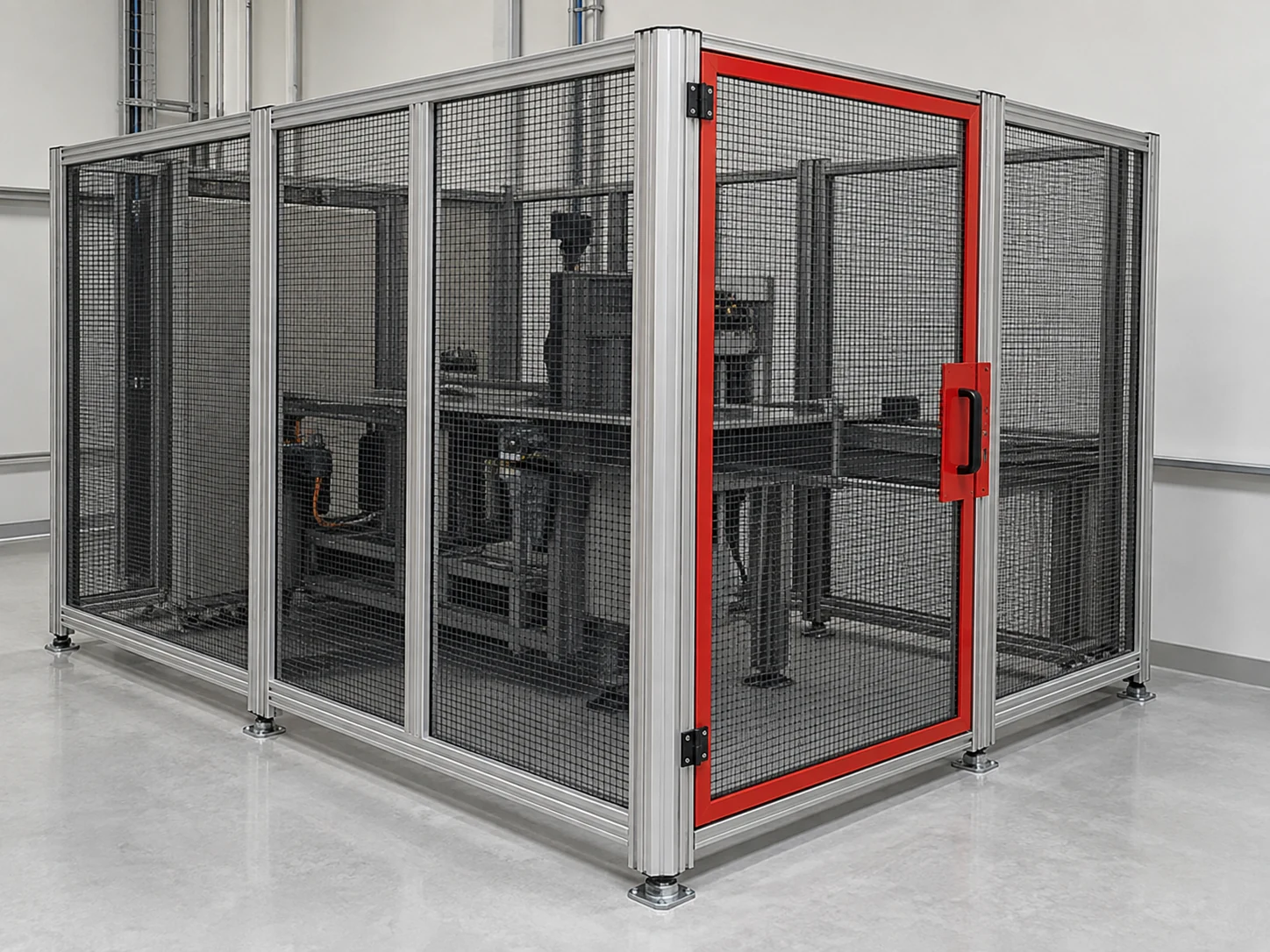
A common mistake with guarding is to think only about blocking access to danger. Effective guarding also needs to allow the right access at the right time. Operators may need loading points, engineers may need maintenance access, and supervisors may need visibility of the process.
Aluminium profile frames help because doors, hatches and viewing panels can be positioned as part of the design rather than treated as afterthoughts. Mesh infill can provide visibility and ventilation. Clear panels can help where sight lines matter. Solid panels can be used where the application calls for more separation.
Where access is part of normal use, guarding may also need safety sensors, relays or other control measures. This is especially relevant for automated equipment. Billington’s guidance on guarding automated lines without restricting access is a useful related read for sites balancing safety and practical movement around machinery.
A clean structure supports safety checks and compliance
Modular guarding is easier to manage when its purpose is obvious. Posts, panels, doors and fixings should show where people can pass, where they cannot pass, and how authorised access is controlled. Aluminium profile frames lend themselves to that clarity because the system is built from ordered components with defined connection points.
That clarity helps during risk assessment reviews and routine inspections. A site team can check whether panels are secure, whether access points close correctly, whether interlocks or sensors are working as intended, and whether changes to machinery have affected the guarding layout.
In the UK, machinery guarding is closely linked to duties around safe work equipment and safe access to dangerous parts. Aluminium profile does not replace good safety thinking. It supports it by giving mesh, polycarbonate, solid sheet, doors and hardware a practical framework that can be specified around the risk.
How to specify a practical aluminium profile system
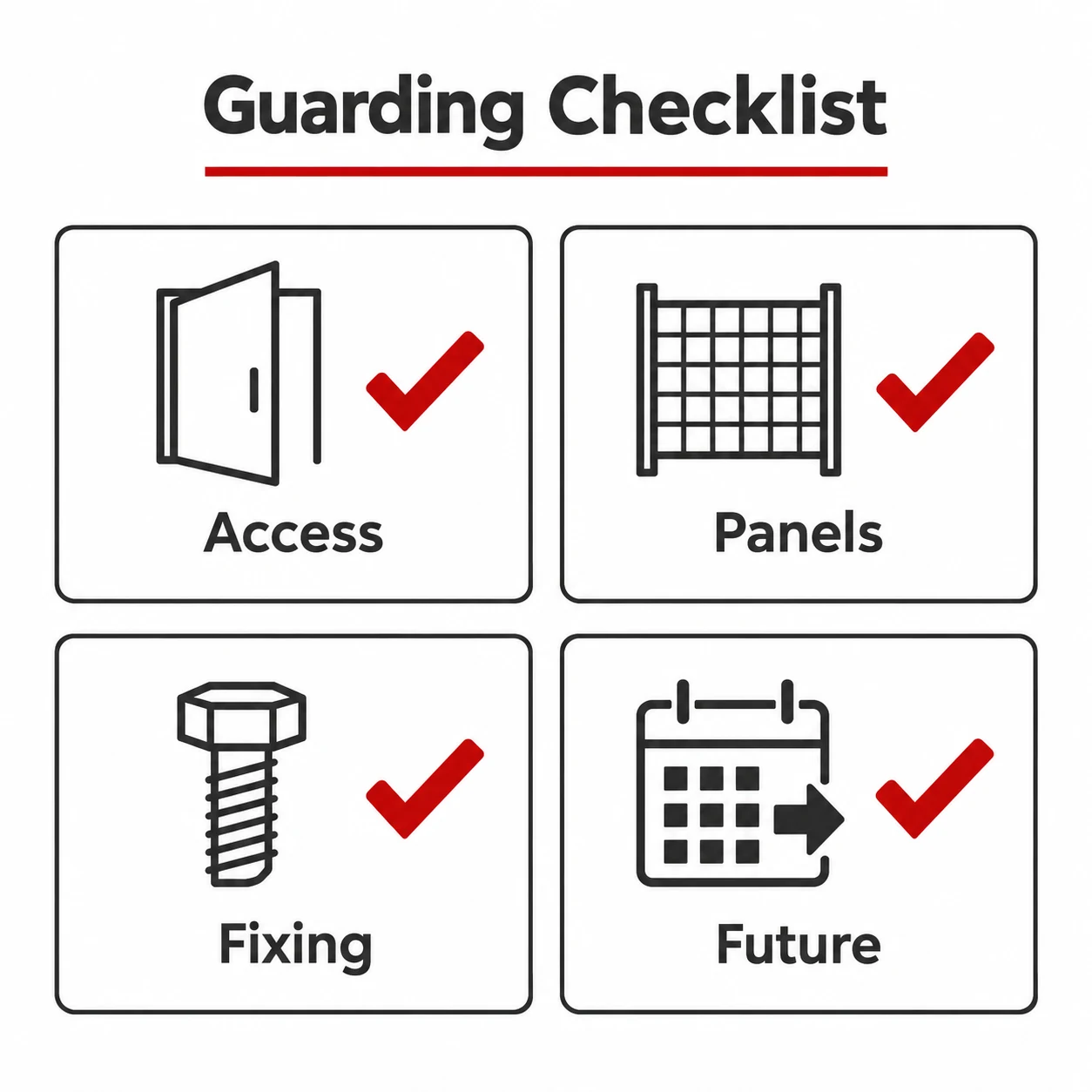
A useful specification begins with the machine and the people who use it. Before choosing panel types or door positions, map the tasks that happen around the equipment. That includes normal operation, cleaning, planned maintenance, inspection, clearing faults and any activity that requires temporary access.
From there, the guarding can be planned around the risks and the workflow. Important questions include where access should be allowed, where it should be prevented, what visibility is needed, whether parts may move outside the machine body, and how the guard will interact with nearby barriers, platforms or storage areas.
- Machinery cells where operators need controlled entry points and clear separation from moving parts.
- Conveyor and transfer areas where guarding needs to follow the route of equipment.
- Assembly or production lines where panels may need review as processes improve.
- Robot or hazardous machinery areas where visibility and controlled access both matter.
- Industrial enclosures where mesh, clear or solid panels need to sit within a neat frame.
If the machine area is likely to be altered, extended or connected to new equipment, a modular aluminium profile system may provide more options than a single purpose fixed arrangement. Billington Safety Systems can design, supply and install machinery guards around the equipment, access needs and risk assessment findings for each application.
- Aluminium profile frames give modular guarding a clean, structured and adaptable base.
- The system can support mesh, clear or solid panels, plus planned doors and hatches.
- Good guarding design should consider operation, maintenance, inspection and future layout change.
- The frame is only one part of safety. Risk assessment and correct access control remain essential.
- A well specified system can make the boundary of a hazard clearer for everyone on site.
Frequently asked questions
Is aluminium profile strong enough for machinery guarding?
Yes, when it is correctly specified for the application. The profile size, fixings, panel type and layout should all be chosen around the machinery hazard, access needs and expected use of the guarded area.
Can aluminium profile guarding be changed later?
In many cases, yes. One of the main benefits of modular aluminium profile is that panels, posts and access points can often be reviewed if the layout or machinery changes. Any alteration should still be checked against the risk assessment.
What panel types can be used with aluminium profile frames?
Common options include welded or woven mesh, clear polycarbonate and solid sheet. The right choice depends on visibility, separation, ventilation, impact risk and the type of machinery being guarded.
Does modular guarding remove the need for safety devices?
No. Physical guarding and safety devices should be considered together where the application requires it. Doors, hatches, sensors, relays and control measures should be planned as part of the overall safety system.
Plan a guarding system that fits your site
If you are reviewing machinery guarding or planning a modular aluminium profile frame, Billington Safety Systems can help you turn the layout, access needs and safety requirements into a clear specification.