
A goods lift can sit close to pedestrian routes, loading points and everyday production activity. Wherever people work beside moving lift equipment, a clearly defined boundary helps keep routine tasks separate from areas where crushing, trapping or falls could occur.
Lift enclosure cages provide a physical barrier around lift travel zones and associated access points. Their effectiveness depends on more than enclosing a space. The layout, mesh specification, gates and relationship with surrounding work areas all need to suit the lift and the way people use it.
Where lift enclosure cages make a difference
Lift enclosure cages are particularly useful where goods move between levels and nearby floor space remains in regular use. In warehouses, this might be beside a mezzanine loading point. In factories, it could be where components travel between production floors. In plant areas, an enclosure can help separate lifting equipment from routes used for inspection and maintenance.
The common issue is proximity. Someone passing a lift may not be involved in its operation, yet could still come close to moving parts or an exposed landing edge. A worker collecting goods may also need protection from movement elsewhere within the lift installation.
Properly specified lift enclosure cages help establish a controlled boundary, with access provided only where it is needed. They can also discourage the surrounding space from becoming an informal shortcut or storage area.
Start by identifying every place where a person could approach the lift, including upper landings and less obvious routes behind adjacent equipment. Protection should follow the actual exposure to danger, rather than simply the most frequently used side of the installation.
How an enclosure separates people from lift hazards
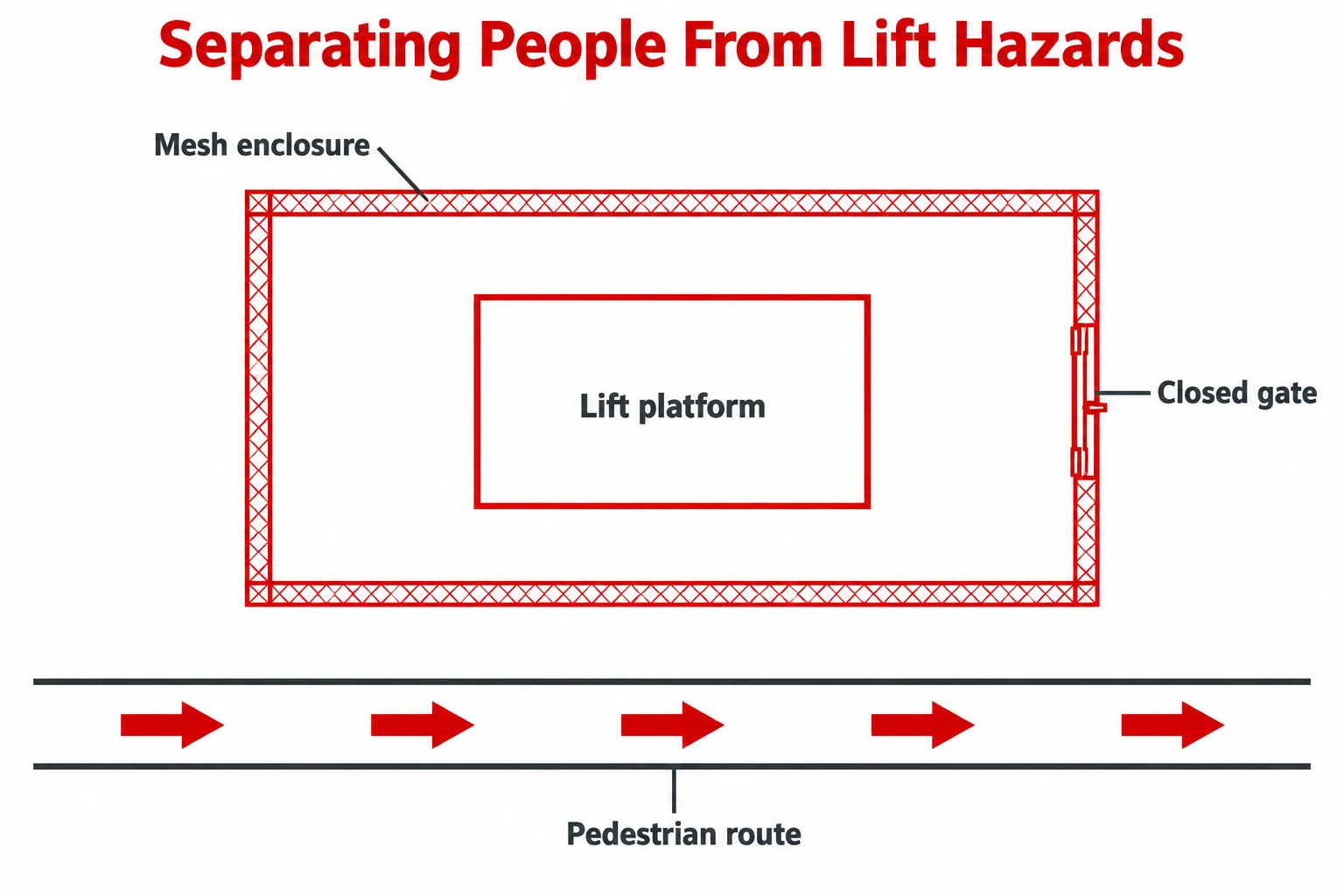
A lift enclosure acts as a guard between people and the lift travel zone. Depending on the installation, the hazards may include contact with a moving platform, trapping between moving and fixed components, and access to an opening when the platform is elsewhere.
Mesh can allow operators to see through the boundary while maintaining physical separation. However, visibility alone does not establish safety. The openings and the distance to hazardous movement must be considered together to prevent people reaching through, over or around the guard.
Height, panel strength, fixings and gaps at floor level also matter. A competent designer should assess these details against the equipment, foreseeable use and relevant guarding requirements. There is no single mesh size or enclosure height that suits every lift.
The same principles underpin effective machine guarding in industrial workplaces: understand the hazard, prevent access and preserve safe operation. Where falling or displaced loads are foreseeable, assess containment separately. An enclosure intended to prevent access should not automatically be assumed capable of retaining every possible load.
Planning safe access at loading points and landings
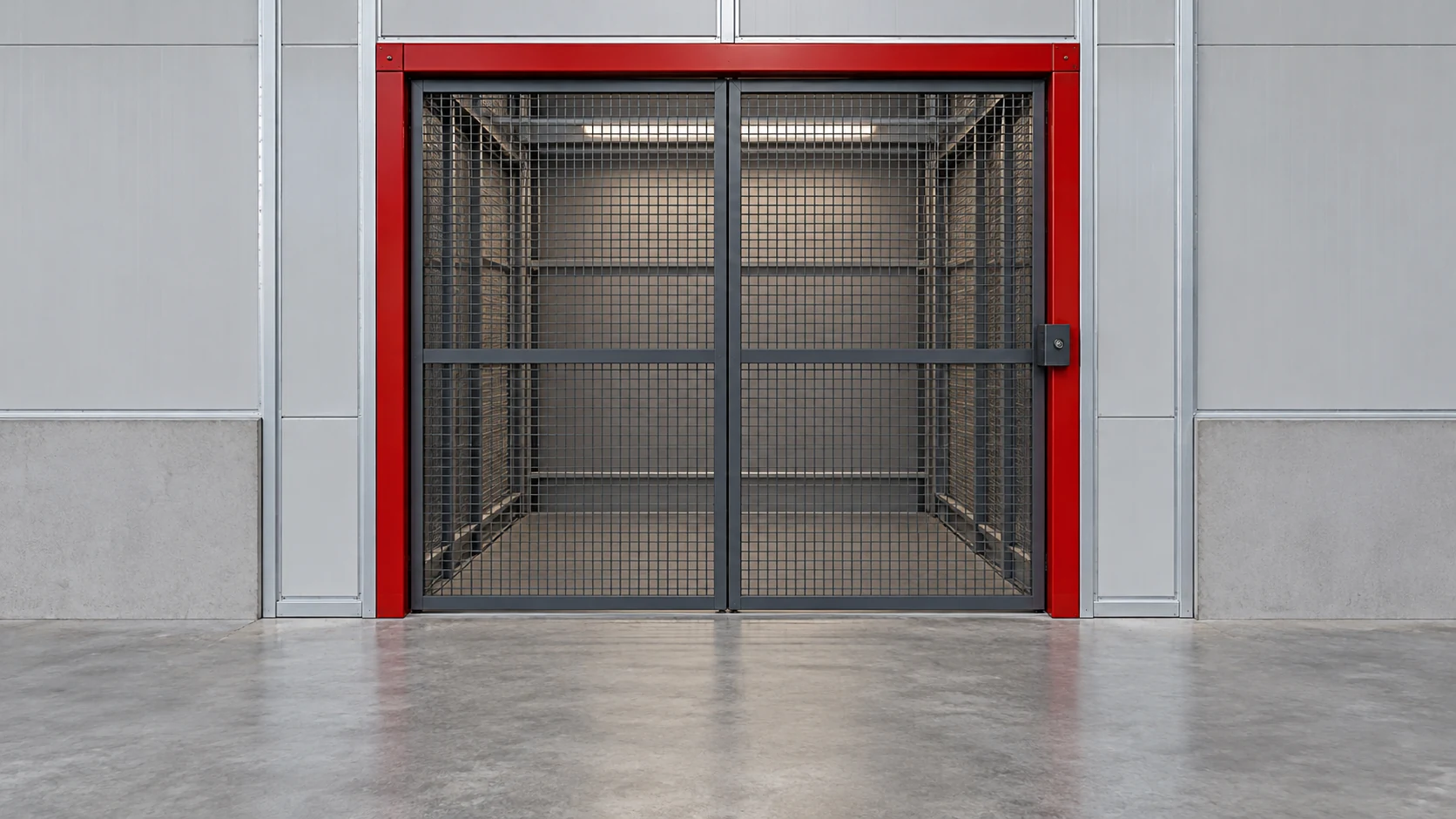
Access points deserve particular attention because they are where people, goods and lift movement meet. A gate needs to support straightforward loading while maintaining protection whenever access would be unsafe. A basic latch is not a substitute for an appropriate safety interlock.
Depending on the lift design and risk assessment, interlocking and guard locking may be needed to prevent unsafe movement and stop a landing gate opening when the platform is absent. These functions should be designed and validated as part of the lift safety system, not treated as separate accessories.
Useful questions when reviewing an access arrangement include:
- Can the expected loads pass through without awkward handling or contact with the enclosure?
- Is there enough space for the operator and handling equipment to approach safely?
- Could an open gate obstruct a pedestrian route or emergency escape route?
- Does every landing remain protected when the lift is at another level?
- Can maintenance staff access necessary components under a suitable isolation procedure?
Discuss these points with the lift supplier and enclosure designer together. Coordinating the interfaces helps ensure that the physical guarding and control system work as one protective arrangement.
Fitting the enclosure into a busy working layout
The space outside the cage matters as much as the enclosed area. Operators need room to position loads, pedestrians need a clear route past the installation, and nearby activities should not encourage people to wait against access gates.
Review normal movements around the lift, including busy periods and deliveries. Consider where pallets are set down, how handling equipment turns and whether queues could spill into pedestrian space. A practical layout gives each activity a defined place without compromising access to the lift.
Where vehicles operate nearby, industrial barriers can provide additional separation or protect vulnerable parts of the installation, subject to suitable specification. A mesh enclosure should not be treated as a vehicle impact barrier unless it has been designed for that duty.
Check the surrounding building too. The enclosure must be compatible with escape routes, fire safety arrangements, lighting and access to essential services. Supporting floors and fixing locations need to suit the proposed installation. Bringing these considerations into the initial assessment helps create a working area that remains practical as well as protected.
Keeping protection effective throughout everyday use
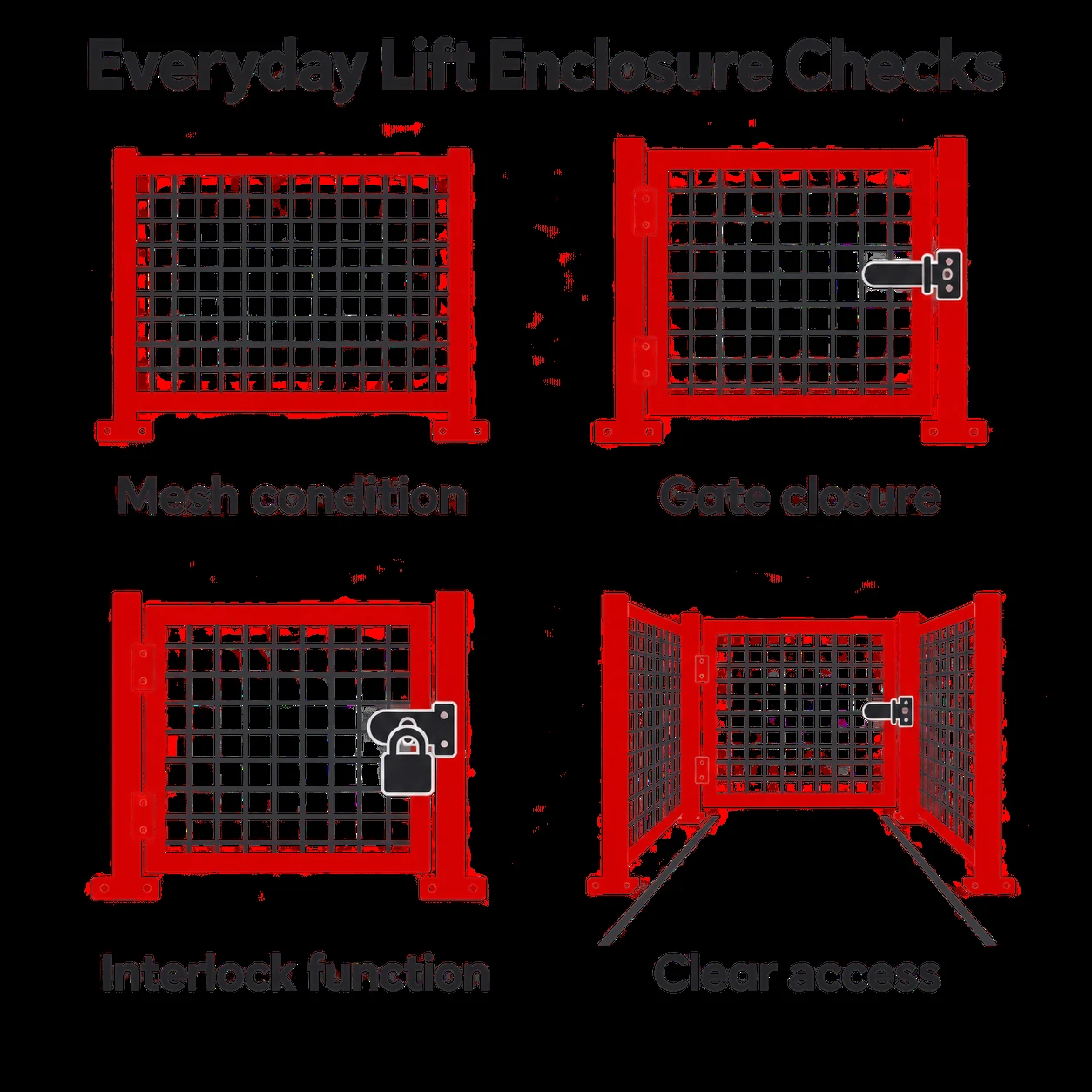
An enclosure should be included in the site’s inspection and maintenance arrangements. Routine checks can identify damaged panels, loose fixings, gates that no longer close correctly and changes to nearby storage that affect safe access. Any defect that compromises protection needs prompt action, with unsafe use prevented until the issue is resolved.
Operators should understand why the boundary is there and know how to report a problem. Interlocks must not be bypassed to keep goods moving. Faults involving safety controls require competent investigation, rather than an improvised workaround.
In UK workplaces, PUWER and LOLER may both be relevant to the lift installation. The applicable inspection, maintenance and thorough examination duties depend on the equipment and its use. Routine enclosure checks do not replace any required thorough examination of lifting equipment.
Revisit the risk assessment when loads, workflows or nearby equipment change. A new pallet position or altered traffic route can affect an otherwise suitable arrangement. Keeping the enclosure, lift controls and surrounding layout under review helps maintain the separation established at installation.
- Assess every approach to the lift, including upper landings and maintenance access.
- Specify mesh, clearances, strength and fixings around the actual hazards.
- Coordinate gates and safety controls with the lift design.
- Plan pedestrian routes, loading space and vehicle protection together.
- Inspect the enclosure and review protection when working arrangements change.
Frequently asked questions
Can a lift enclosure cage be fitted around an existing lift?
It may be possible, subject to a survey of the lift, available space, supporting structure and access requirements. Any changes affecting gates or safety controls should be coordinated with a competent lift specialist.
Does every lift enclosure need interlocked gates?
The access arrangements depend on the lift and its hazards. Where opening a gate could expose someone to dangerous movement or a fall, suitable interlocking and possibly guard locking will need consideration within the safety design.
Can mesh guarding replace barriers around a lift?
They serve different purposes. Mesh guarding can prevent access to hazardous areas, while suitably specified barriers can manage traffic separation or impact risks. Some installations benefit from both.
What information helps when planning an enclosure?
Useful details include lift dimensions, travel height, landing positions, load sizes, handling methods and nearby pedestrian or vehicle routes. Existing lift documentation and the site risk assessment also help establish the requirements.
Plan a safer boundary around your lift
If you are reviewing protection around a goods lift, speak to Billington Safety Systems about your enclosure requirements. Share how the area is used so the discussion can focus on safe separation, practical access and everyday operation.