Anti collapse mesh is most useful when it is placed where people, stock or work areas are exposed to the back of pallet racking.
For buyers and site managers, the real question is not simply whether mesh is needed. It is where the risk sits, how much coverage is sensible, and how the system should support the way the warehouse actually operates.
Start with exposed racking backs
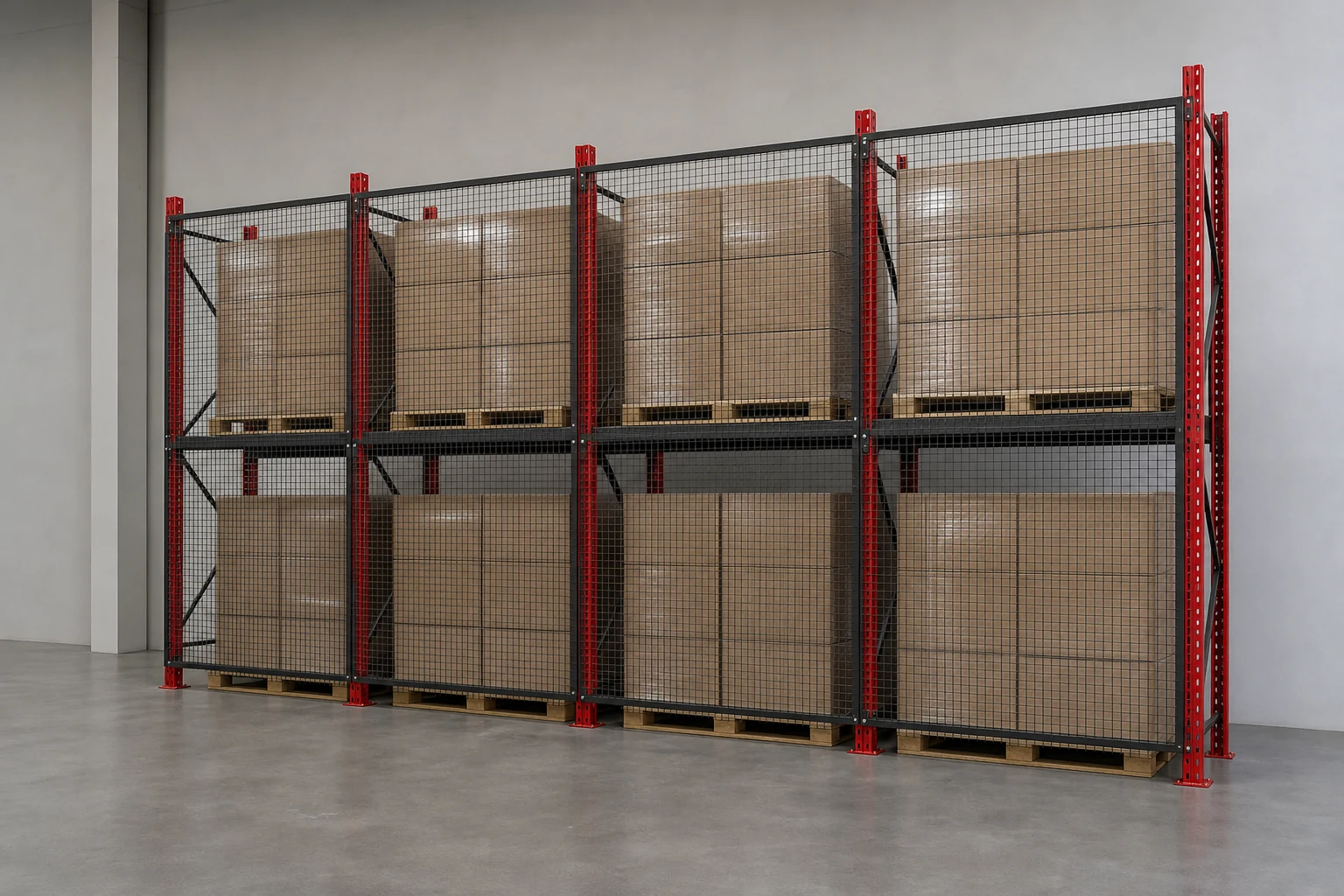
The first place to consider anti collapse mesh is any racking run where the back face is open to another activity. Pallets are usually loaded and retrieved from the front, but the rear of the rack can still present a risk if goods move, lean, overhang or become unstable.
Exposed backs are common where racking sits beside a pedestrian route, next to a packing bench, along a marshalling space or close to another working area. In these locations, a falling item does not have to travel far before it reaches someone who is not involved in the racking activity.
A practical survey should look at what is stored, how pallets are handled, how often the location is used and what sits behind the racking. Light cartons, loose components, boxed products and mixed pallets can all behave differently. Mesh coverage should reflect the real storage pattern rather than a drawing that only shows rack dimensions.
Where the rear of the rack faces a clear wall with no access, the priority may be lower. Where the rear faces people, routes or active workstations, it becomes a much more obvious candidate for a properly specified anti collapse mesh system for pallet racking.
Protect pedestrian routes and escape paths
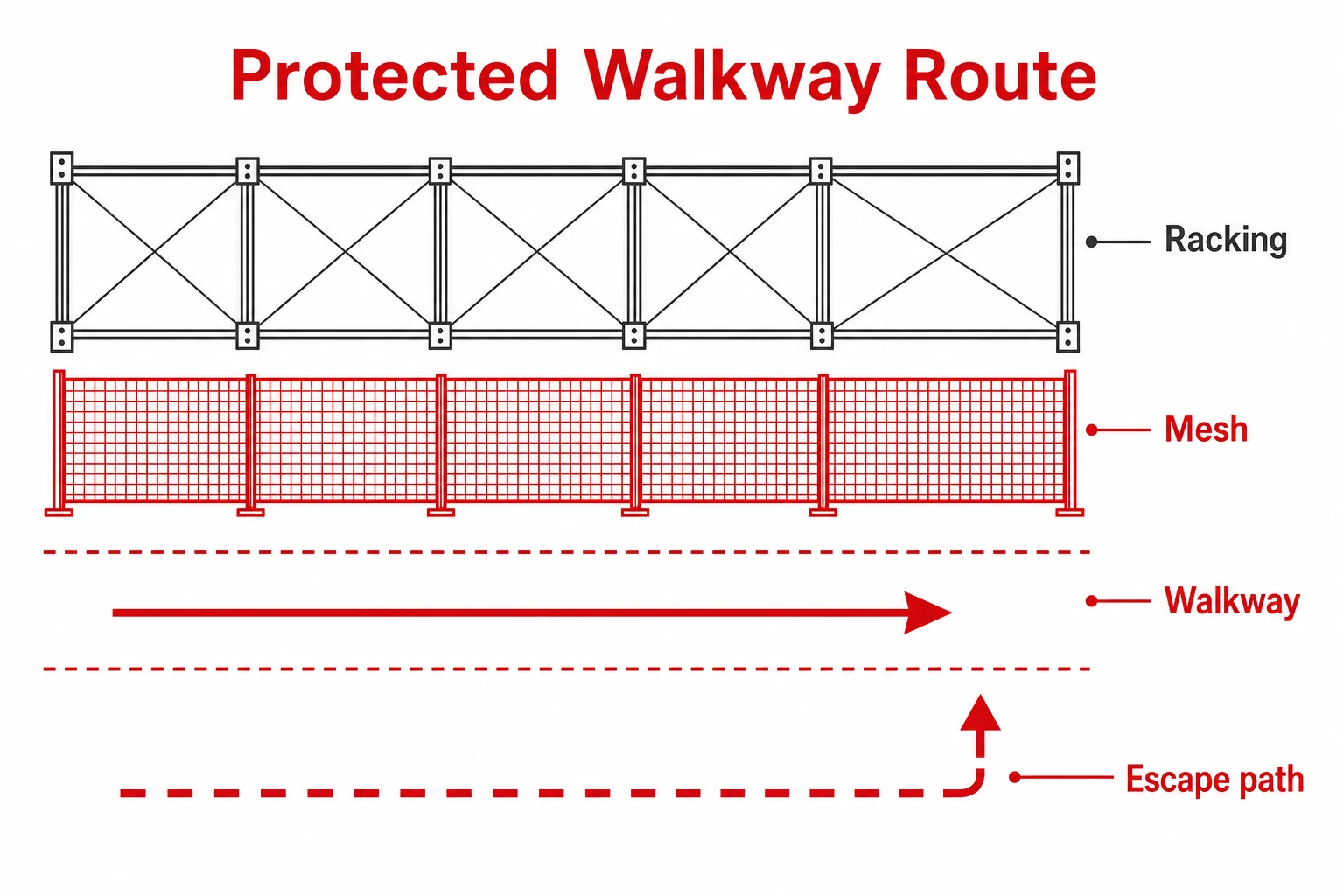
Pedestrian routes behind or beside racking deserve close attention. Walkways are predictable movement zones, which means people may pass the same racking backs many times during a shift. If those routes are used by staff, visitors, maintenance teams or supervisors, the need for separation is easier to justify.
Anti collapse mesh is often used where racking runs along marked walkways because it creates a physical barrier between stored goods and people using the route. It does not replace good pallet condition, correct loading or rack inspections, but it adds an important layer of protection in the area where exposure is highest.
Escape paths should also be considered. These routes need to remain clear and dependable. If palletised goods could fall into a route, block access or create a hazard during normal operations, mesh can help manage that risk. Coverage should follow the length of the exposed racking and take account of the height at which goods are stored.
It is worth reviewing corners, crossings and door approaches as well. These are the places where people may pause, turn or meet other traffic. A short unprotected section can undermine an otherwise sensible layout if it sits exactly where people are most likely to pass.
Consider picking areas and hand loaded stock
Picking areas often combine storage, movement and manual handling in a tighter space. Staff may work near the racking for longer periods, reach into lower levels, use trolleys or prepare orders close to stored stock. Where the back of the racking faces these activities, anti collapse mesh can help separate the picking operation from stored goods above or behind it.
The type of stock matters. Mixed pallets, loose cartons, trays, bins and irregular loads may need more thought than uniform palletised goods. If items can shift during loading, picking or replenishment, the mesh should be specified to suit the likely item size and the racking layout.
For some picking operations, rear mesh is only one part of the answer. Mesh decking can support individual items and cartons within the rack itself, particularly where loads are not always stored on standard pallets. If the concern is small items dropping through beam levels, mesh decking for picking areas may sit alongside rear guarding as part of a more complete storage approach.
The key is to separate two questions. Anti collapse mesh helps stop items leaving the rear of the rack. Decking helps support goods within the rack level. Many warehouses need one or the other, and some need both.
Look at shared work zones near racking
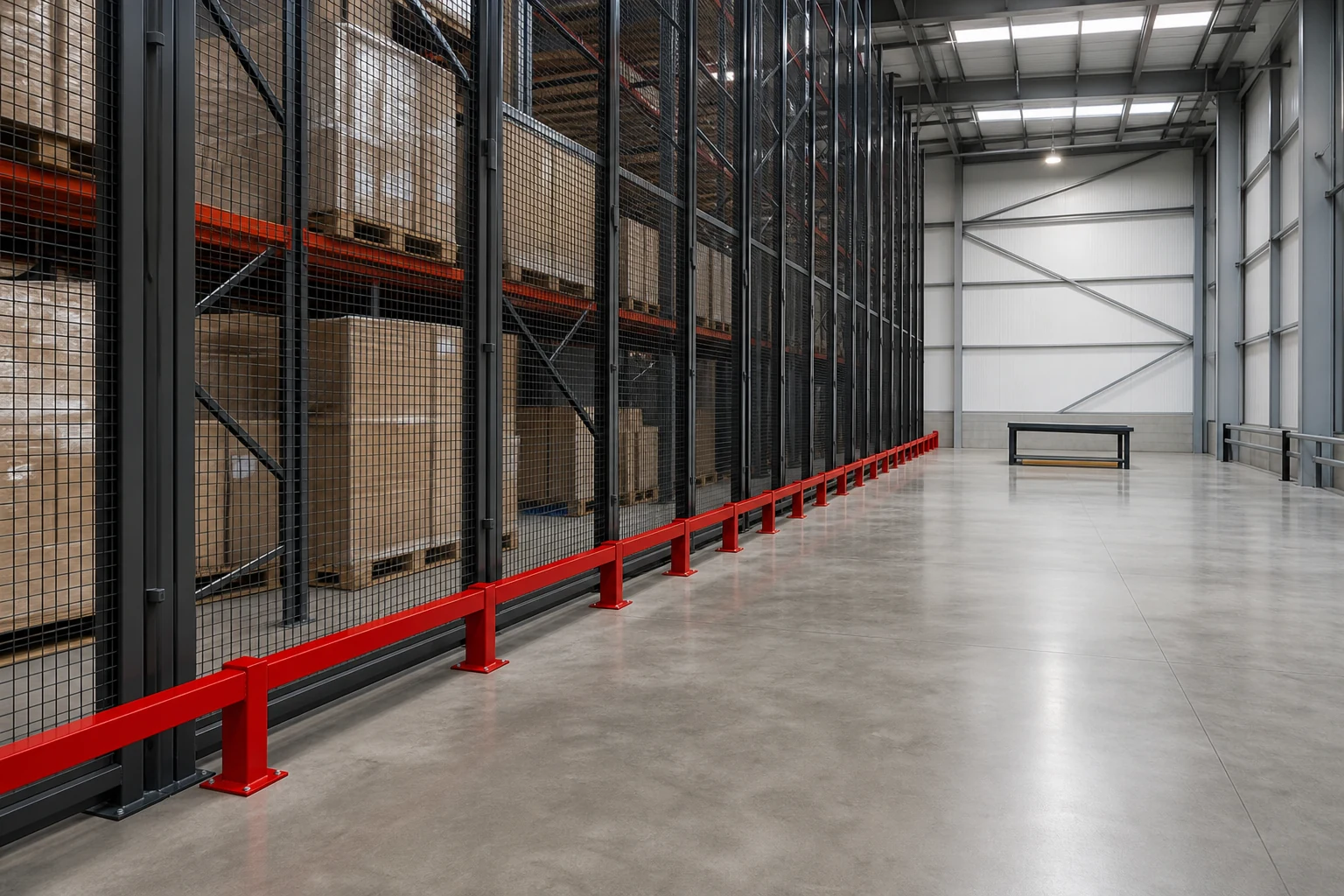
Racking rarely exists in isolation. It often sits beside packing benches, goods in areas, quality checks, maintenance access, plant, offices, cages or barrier lines. These shared zones need careful review because people may be focused on a task rather than watching the racking behind them.
Anti collapse mesh is especially useful where a person might work with their back to stored goods. A packing bench placed behind racking, for example, can expose staff to items they cannot see. The same applies to inspection tables, returns areas and stock preparation spaces.
Where valuable or controlled goods are stored, mesh may also be considered alongside cage systems. The purpose is different, but the layout questions overlap. If an area needs both containment and access control, pallet racking cages may be worth reviewing as part of the wider specification.
Do not only look at permanent workstations. Temporary habits can become part of the real operation. If pallets are regularly staged behind racking, if staff wait there for tasks, or if maintenance access is routine, the area should be assessed as a live exposure point.
Match mesh coverage to the actual risk
Good placement is about proportion. The aim is to cover the areas where a falling object could realistically reach people, active work areas or important routes. That means the right answer is not always every rack in the building. It may be a full run, a specific aisle, a rear face near a walkway, or a zone where picking and packing take place.
Height matters as much as length. If goods are stored across several beam levels, coverage should follow the levels where items could fall. The mesh should also be set out so it does not interfere with normal pallet loading, sprinkler performance, inspection access or safe maintenance.
Bracket depth, mesh size, frame design and finish should be chosen to suit the racking and stored goods. Existing racking can often be reviewed for suitable fixing positions, while new racking layouts can include mesh requirements from the start. Where dimensions or site conditions are unusual, a bespoke approach can keep the system practical without compromising the safety intent.
Buyers should also think about future changes. A rack that currently stores uniform pallet loads may later hold mixed cartons or lighter goods. If the area is likely to change, it is sensible to specify for the likely operating range rather than only the current snapshot.
If the team is still defining the broader storage risk, a guide such as safe storage practices for preventing warehouse collapses can help frame the wider controls around inspection, loading and housekeeping.
Use a simple placement checklist before specifying
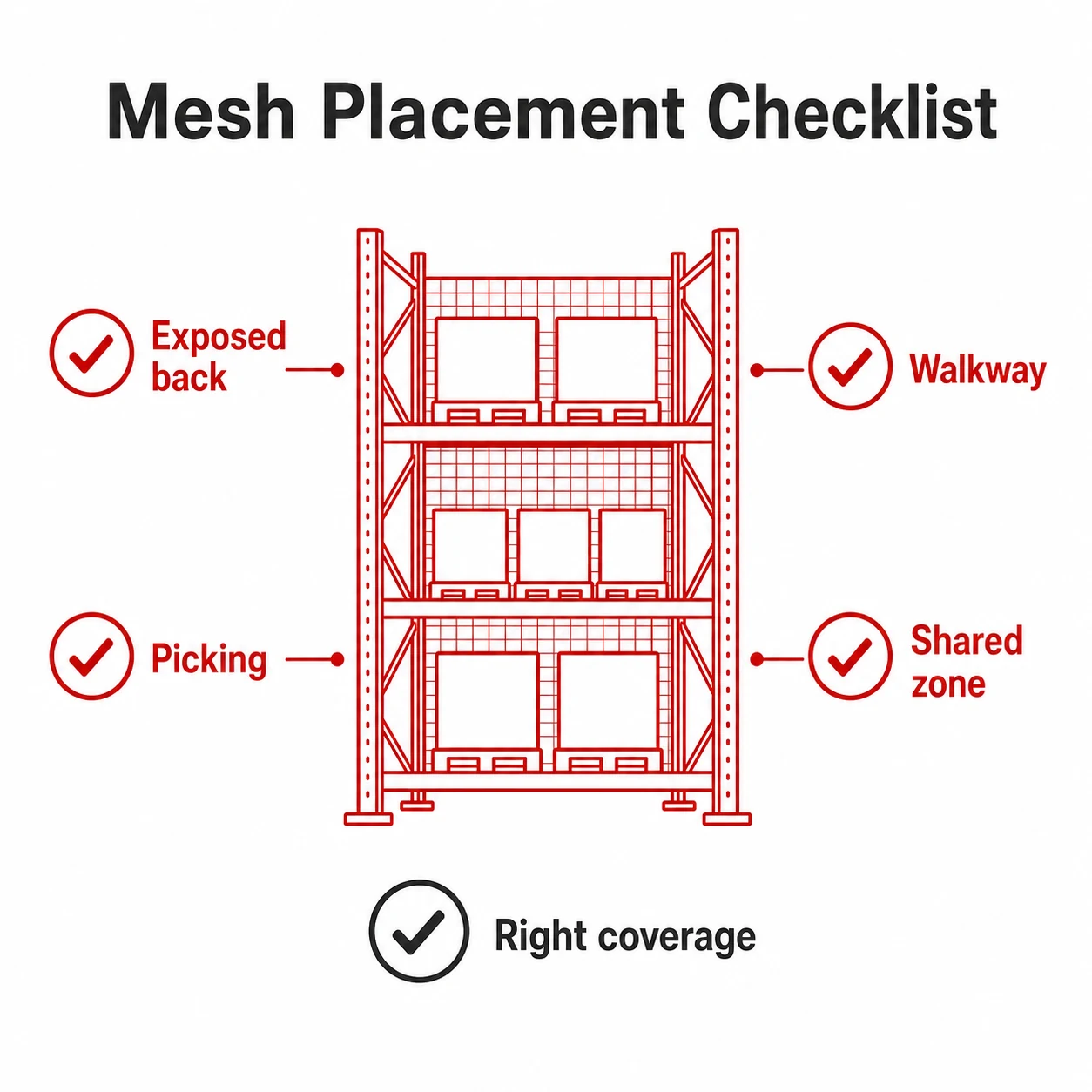
Before requesting a quotation or finalising a layout, walk the racking and mark each rear face by exposure. This does not need to be complicated. It just needs to reflect the way the space is used.
- Identify racking backs that face walkways, doors, workstations or picking areas.
- Note the type of goods stored, including loose cartons, mixed pallets and irregular loads.
- Check whether people stand, walk or work behind the racking during normal operations.
- Review the full height of storage, not only the lower beam levels.
- Consider whether mesh decking, cages, barriers or other guarding may be needed in the same zone.
This process gives suppliers and installers better information. It also helps internal teams understand why some areas need mesh coverage and others may not. That clarity is useful when balancing safety, access and day to day workflow.
- Anti collapse mesh is most useful where the rear of pallet racking faces people, routes or active work areas.
- Pedestrian routes, escape paths, picking areas and packing benches should be reviewed first.
- Coverage should follow the real risk, including rack length, storage height, stock type and how the area is used.
- Mesh behind racking and mesh decking inside racking solve different problems and may work together.
- A simple site walk helps buyers define sensible coverage before specifying a system.
Frequently asked questions
Does every run of pallet racking need anti collapse mesh?
Not always. The priority is usually racking where the rear face is exposed to pedestrians, workstations, picking zones or other active areas. Racking against an inaccessible wall may present a different level of risk, so it should be assessed in context.
Is anti collapse mesh the same as mesh decking?
No. Anti collapse mesh is fitted behind racking to help stop goods leaving the rear of the rack. Mesh decking sits within the rack level to support stored items. Some layouts benefit from both.
Can anti collapse mesh be fitted to existing pallet racking?
In many cases, yes. Existing racking can be assessed for suitable brackets, fixing positions and coverage. The exact specification depends on the racking type, dimensions and site conditions.
What should buyers check before asking for a quote?
Check which racking backs face people or work areas, what goods are stored, how high they are stored and whether picking, packing or maintenance happens nearby. Photos, measurements and a basic marked layout can help the supplier respond accurately.
Plan safer racking backs
If you are reviewing exposed pallet racking, Billington Safety Systems can help assess where anti collapse mesh belongs and specify a practical system for your site.