Factory partitioning is often the right answer when a business needs to divide space, protect people or organise production. Mesh, solid and double skin systems can all make a busy site easier to manage.
There are situations, however, where separation is not only about physical boundaries. When a process is sensitive to dust, contamination, airflow, cleaning routines or unwanted contact, a purpose built cleanroom can provide a more controlled and dependable working area.
Where standard factory partitioning reaches its limit
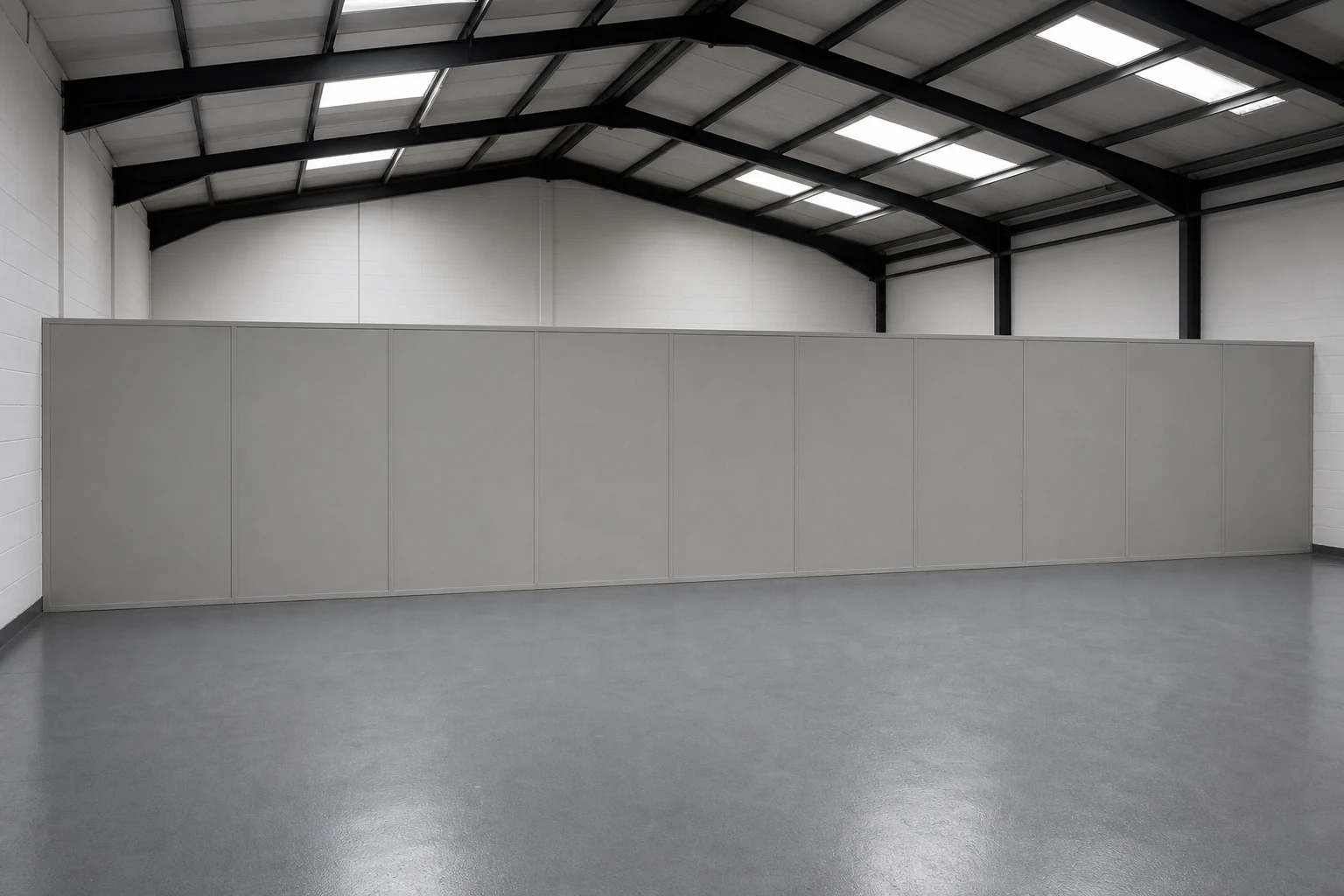
Standard factory partitions are designed to create defined areas. They can separate pedestrian routes from production, divide storage from assembly, create offices, restrict access or provide a clear barrier between different work zones. For many industrial environments, that is exactly what is needed.
The question changes when the process inside the area needs more than a boundary. If a product, component, material or packaging operation can be affected by dust, debris, handling or changes in the surrounding environment, the enclosure itself becomes part of process control.
A partition may stop people walking through an area, but it may not give the same level of control over airborne particles, cleaning standards, ceiling finish, access discipline or pressure management. A cleanroom is intended to help manage those details as part of one enclosed work area.
That distinction matters because sensitive factory work is often affected by several small risks at once. A door left open, nearby movement, dust from adjacent work, exposed surfaces that are difficult to clean and uncontrolled gaps can all undermine consistency. A cleanroom helps reduce those variables by treating the room as a controlled space, rather than simply a divided space.
For background on ordinary partition choices, Billington has also covered how different solid and mesh partitioning options affect airflow, light and worker comfort. That comparison is useful because it shows why some applications need visibility and ventilation, while others need a more enclosed arrangement.
What a cleanroom adds to a separated work area
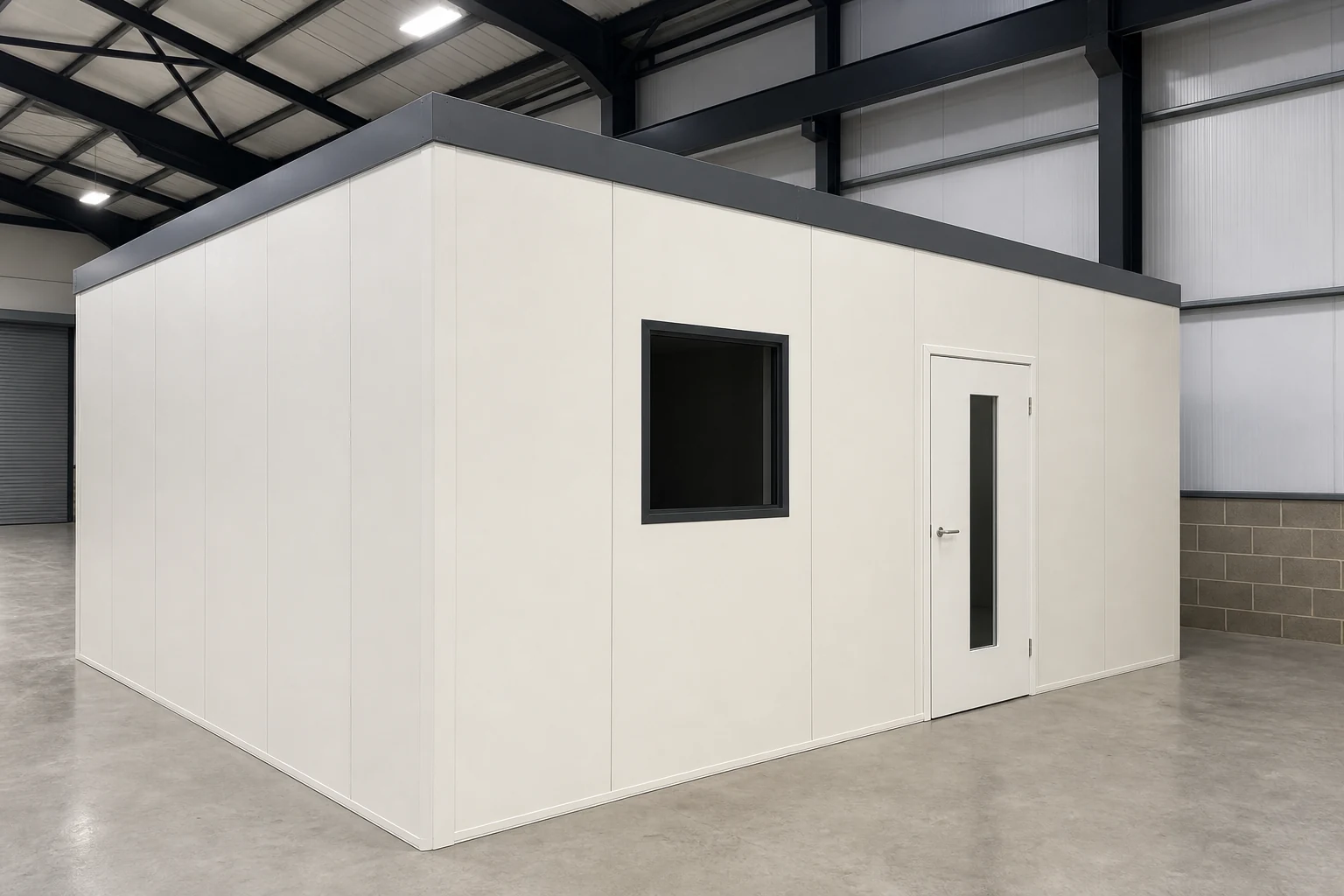
A cleanroom is not just a nicer version of a factory partition. It is a dedicated enclosed area designed to support cleaner, more controlled work. The exact specification will depend on the process, but the principles are consistent.
Walls, windows and ceiling elements should be suitable for regular cleaning. Surfaces that can be wiped down help teams keep the room in a predictable condition. Ceiling tiles may also need to stay secure while allowing practical access for maintenance. Where appropriate, filters can help move unwanted air out through gaps or openings, supporting a cleaner internal environment.
Double skin panels are often useful in this type of installation because they can create a solid enclosed wall system. Depending on the design, they can also support acoustic improvements, especially where double glazing or insulated panel construction is relevant. That can be valuable when a sensitive process also needs a quieter working area or when the room sits near louder production activity.
The most important benefit is control. A well planned cleanroom gives a business a defined area where access, cleaning, airflow, surfaces and process layout can be managed together. This makes it easier to separate work that needs extra care from the wider movement and activity of the factory floor.
Billington Safety Systems provides cleanrooms for industrial processes and clean working environments, including rooms that use double skin partitioning and wipeable materials suited to practical factory use.
Processes that often need cleaner separation
Cleanrooms can be useful wherever a business needs to protect a process from the general factory environment. That does not mean every enclosed process needs one. The decision should be led by what is being handled, how sensitive it is and what could affect quality, safety or consistency.
Packaging is a common example. If items need to be packed in a cleaner environment, it may not be enough to mark off a corner of the production floor. A dedicated room can reduce exposure to dust, general traffic and nearby operations.
Assembly work may also benefit from cleaner separation, particularly where small parts, fine tolerances or surface finishes are involved. The same applies to inspection tasks, testing areas, product preparation and processes where contamination could cause rework or rejection.
Some businesses also use cleanrooms to separate people and materials in a more disciplined way. Controlled access helps limit unnecessary movement through the room. Defined entry points make it easier to manage who enters, what they bring in and how the area is used during a shift.
A simple way to assess the need is to ask what problem the partition is expected to solve. If the answer is mainly access control, visibility or impact separation, a standard partition system may be suitable. If the answer includes cleanliness, wipeable finishes, air movement, dust reduction or protecting a sensitive process, a cleanroom should be considered earlier in the design conversation.
How cleanrooms fit alongside wider factory partitioning
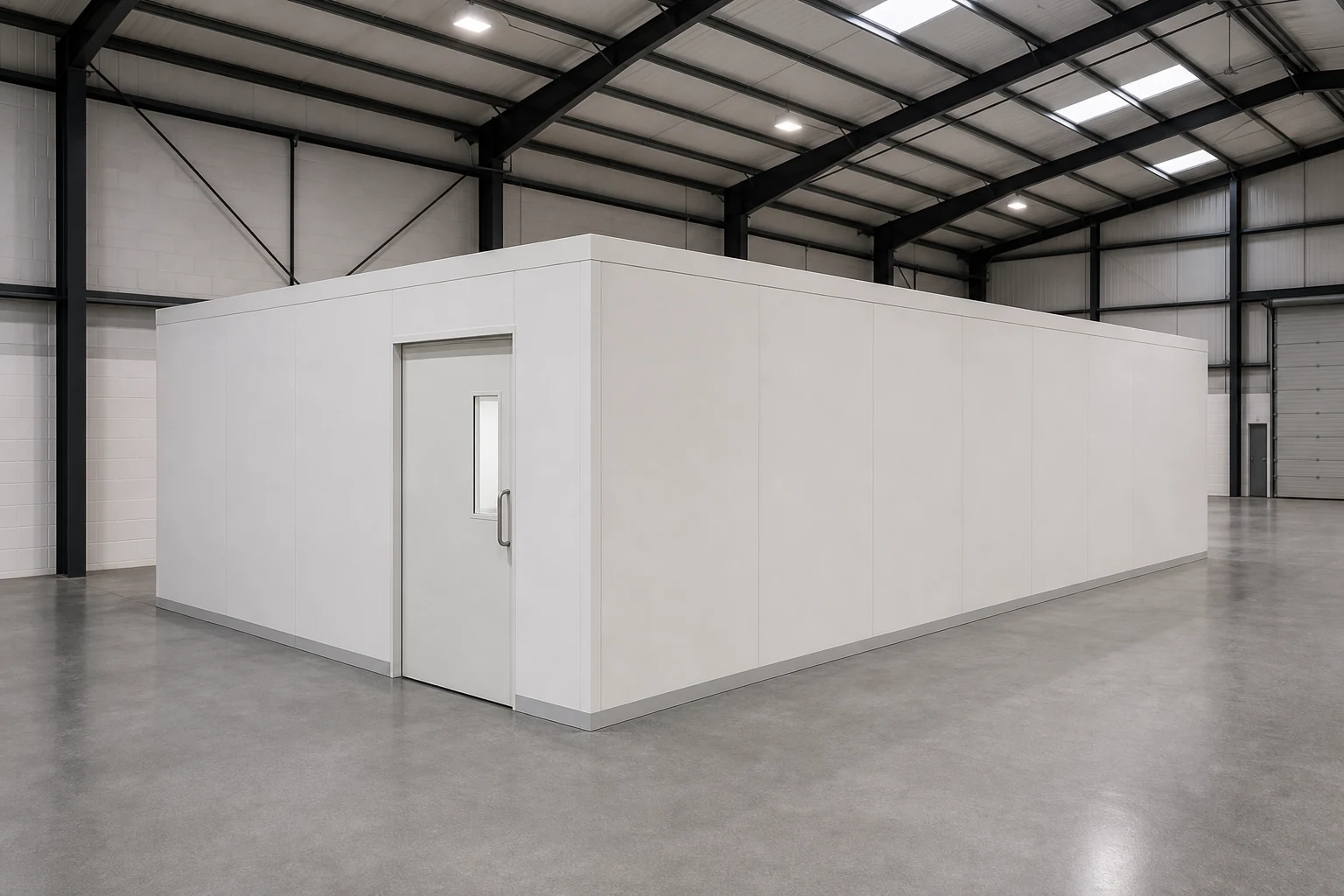
Cleanrooms do not replace all other forms of partitioning. In many sites they sit alongside warehouse partitioning, machine guarding, mesh cages, barriers and work platforms as part of a wider safety and layout strategy.
A factory might use mesh guarding around machinery, solid partitioning for welfare or office areas, barriers for traffic routes and a cleanroom for a process that needs a controlled environment. Each system has a different job. The best layouts usually come from choosing the right type of separation for each risk or workflow.
This is where decision making can become clearer. Mesh partitioning is useful when airflow and visibility matter. Solid partitioning is useful when privacy, containment or a stronger visual division is needed. Cleanrooms are useful when the room conditions themselves are part of the process requirement.
For businesses reviewing broader factory layouts, Billington has written about the role of warehouse partition systems in industrial safety. That sits neatly alongside the cleanroom decision because it helps identify when a normal partition solves the problem and when a more controlled room is the better fit.
It is also worth thinking about how the cleanroom will connect with the rest of the site. Access routes, material flow, nearby machinery, cleaning routines, waste movement and maintenance access all influence how well the finished room works in daily use. A cleanroom should support the operation, not feel separate from how the business actually runs.
Practical design points to consider before specifying a cleanroom
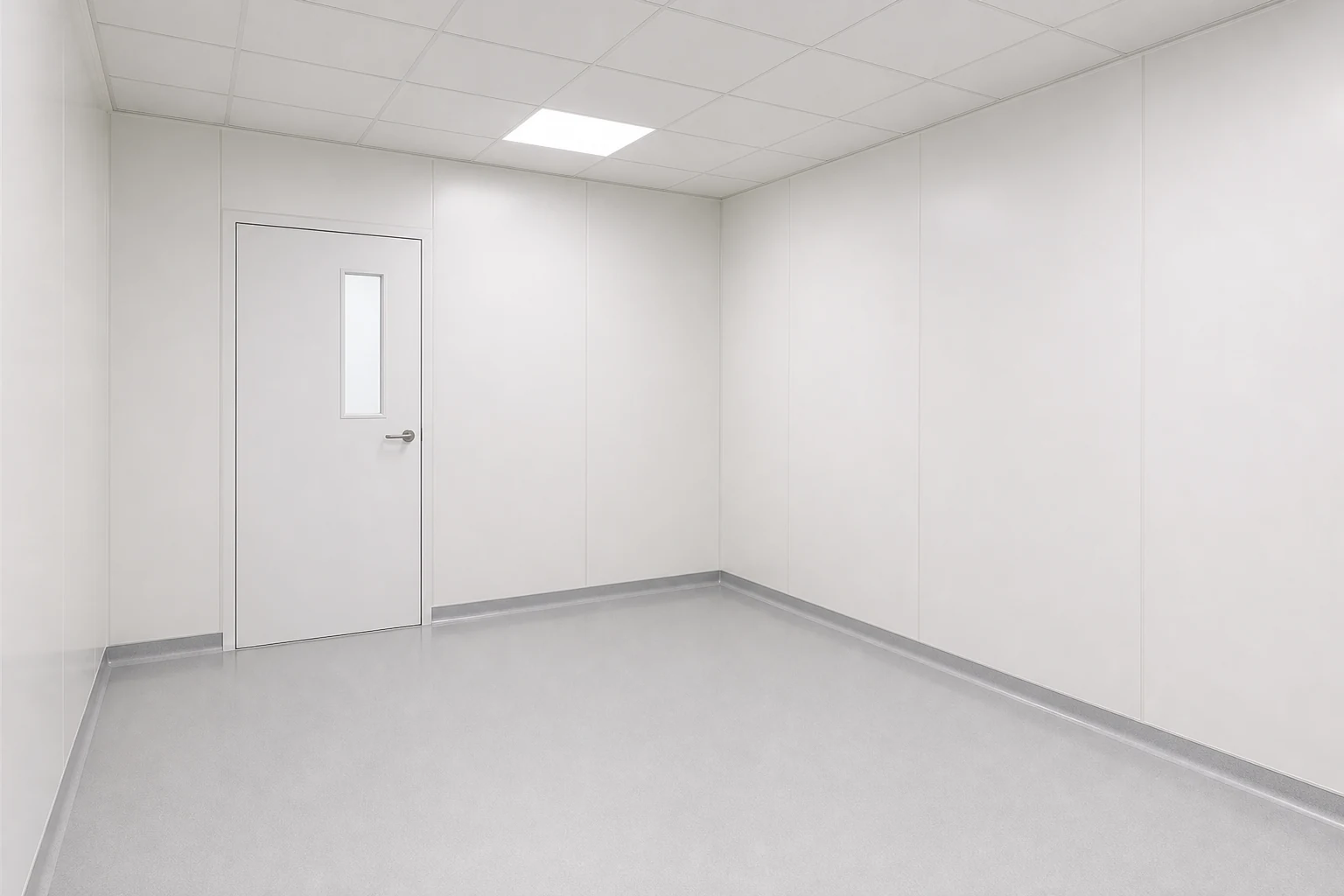
Before choosing a cleanroom, it helps to define the process in practical terms. What will happen inside the room? Who will use it? What materials will move in and out? What needs to be kept away from the process? How often will the area be cleaned? The answers shape the layout and specification.
Access is one of the first details to consider. Doors should support the way people and materials move, while still helping to maintain separation. Too few access points can make the room awkward. Too many can make control harder. The right answer depends on the workflow.
Surface finish is another key factor. Walls, glazing and ceiling materials should suit the cleaning regime. If the room is expected to be wiped down regularly, the design should support that from the start.
Air movement should also be discussed early. Some processes simply need a cleaner enclosed space, while others may need filtration or pressure related considerations. The right approach depends on the level of control required and the sensitivity of the work.
Finally, think about future change. Industrial sites evolve. A demountable partition based system can be useful because it gives the business a practical route to adapt the room if production requirements change. Planning for flexibility does not mean overcomplicating the design. It means making sure the room can serve the business beyond the first installation.
Choosing the right separation for sensitive work
The best choice is rarely made by asking whether cleanrooms are better than partitions. They are designed for different needs. A standard partition creates separation. A cleanroom creates separation with added control.
If your process needs cleaner surfaces, reduced dust exposure, controlled access and a dedicated working environment, a cleanroom is likely to be the more suitable route. If the aim is simply to mark out space, protect people from hazards or divide warehouse activity, another partitioning or guarding system may be enough.
A useful specification process starts with the risk or quality issue, not the product name. Identify what must be protected, what it must be protected from and how the area will be used every day. From there, the right system becomes much easier to define.
That approach also helps avoid under specifying the room. Sensitive processes can suffer when the enclosure looks correct but does not support cleaning, access control or airflow expectations. A cleanroom should be planned around real working conditions, including shift patterns, operator movement, maintenance and housekeeping.
For manufacturers and warehouse operators, the outcome should be simple: a clean, controlled and practical area that protects the process without interrupting the wider operation.
- Standard factory partitioning is useful for dividing space, but sensitive processes may need extra control.
- Cleanrooms help manage cleanliness, access, wipeable surfaces and air movement in one enclosed area.
- Packaging, inspection, assembly and preparation tasks can all benefit from cleaner separation when process quality is at risk.
- The right choice depends on what must be protected, what could affect it and how the area will be used each day.
Frequently asked questions
What is the difference between a cleanroom and a factory partition?
A factory partition mainly divides space or controls access. A cleanroom creates a more controlled working area, with features such as wipeable surfaces, enclosed walls, suitable ceilings and possible filtration depending on the process.
Do all sensitive factory processes need a cleanroom?
No. Some processes only need a simple divided area, guarding or standard partitioning. A cleanroom becomes more relevant when dust, cleaning standards, access discipline, airflow or contamination could affect the work.
Can a cleanroom be built inside an existing factory or warehouse?
Yes, cleanrooms can often be designed as enclosed areas within existing industrial buildings. The layout should be planned around access, material flow, cleaning, maintenance and the surrounding work areas.
What should be considered before requesting a cleanroom quote?
It helps to know what process will take place inside, how many people will use the room, what needs to be kept out, how materials will move, what cleaning is required and whether future layout changes are likely.
Planning a cleaner separated work area?
If a standard partition does not give your sensitive process the control it needs, Billington Safety Systems can help you review the options and specify a practical cleanroom for your site.