
A warehouse cage is only as useful as its access point. If the opening is too narrow, poorly positioned or difficult to control, staff can lose time moving stock and the separated area can become harder to manage.
Double door mesh partition access can solve that problem neatly. It gives teams a wider, controlled entry point for pallets, trolleys, cages and bulky goods, while still keeping stock, machinery, maintenance areas or restricted zones clearly separated.
Why access design matters in warehouse cages
Mesh partitioning is often discussed in terms of separation, visibility and security, but the door design deserves just as much attention. The access point is where people, products and equipment meet. If it is not planned properly, it can create pinch points, slow handling routines or encourage staff to leave areas open for convenience.
A double door arrangement is useful where a standard single door would restrict movement. It allows wider loads to pass through without forcing staff to tilt, twist or repeatedly reposition goods. That can be especially helpful in stores, picking zones, maintenance stores, tool areas, quarantine zones and secure stock areas.
Good access design starts with the job the cage needs to do. A cage used for small parts may only need pedestrian access most of the time. A cage used for palletised stock, equipment, waste handling or larger containers may need an opening that supports wider movement without compromising control. This is where a well planned double door mesh partition can make the area feel practical from day one.
For a broader look at how these systems are used, Billington Safety Systems has a useful overview of mesh partitioning for industrial and warehouse environments.
When double doors are the right choice
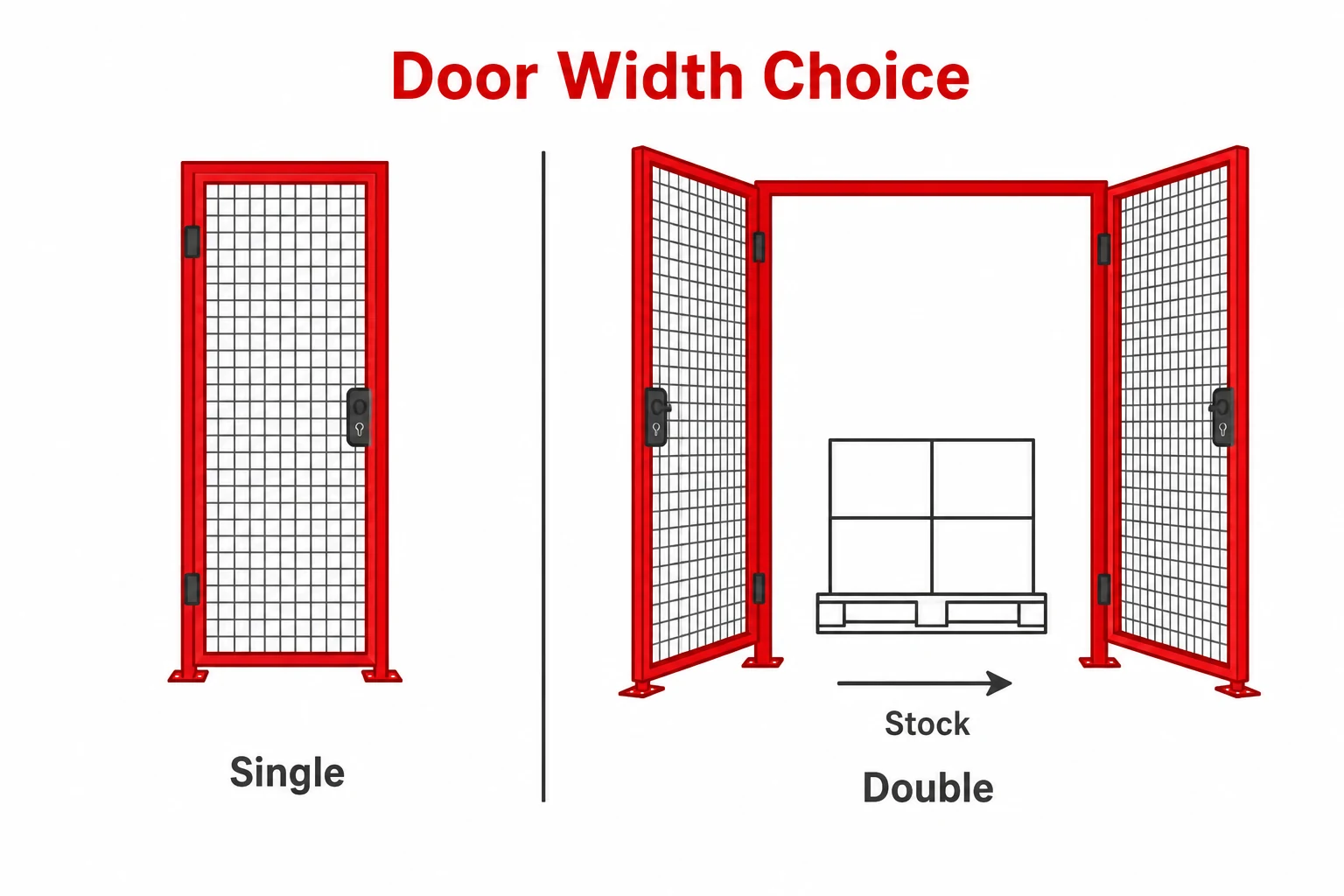
Double doors are not needed for every cage, but they are worth considering wherever larger items need controlled access. They can support regular movement of pallets, stillages, bins, roll containers, cleaning equipment, maintenance parts and boxed stock. They can also help where staff need to move items through the opening without stepping into vehicle routes for longer than necessary.
A double door mesh partition can be particularly useful when the cage sits beside a working aisle or a stock movement route. With the right layout, doors can open in a way that keeps the access point predictable and reduces disruption to nearby activity. The goal is not simply to make the opening larger. It is to make access safer, clearer and easier to manage.
Common reasons to specify double doors include:
- Frequent handling of wide or bulky stock.
- Access for pallet trucks, trolleys or service equipment.
- Segregation of controlled stock without slowing authorised movement.
- Improved usability for staff who handle goods throughout the shift.
- Flexible access for inspection, cleaning or maintenance tasks.
Where the cage is used for valuable or sensitive goods, wider access should still be paired with suitable locks, clear procedures and sensible supervision. The point is to improve movement without weakening the purpose of the enclosure. If the priority is higher value or restricted stock, the principles covered in secure storage cages for valuable stock and hazardous materials are also relevant.
Balancing stock movement with separation
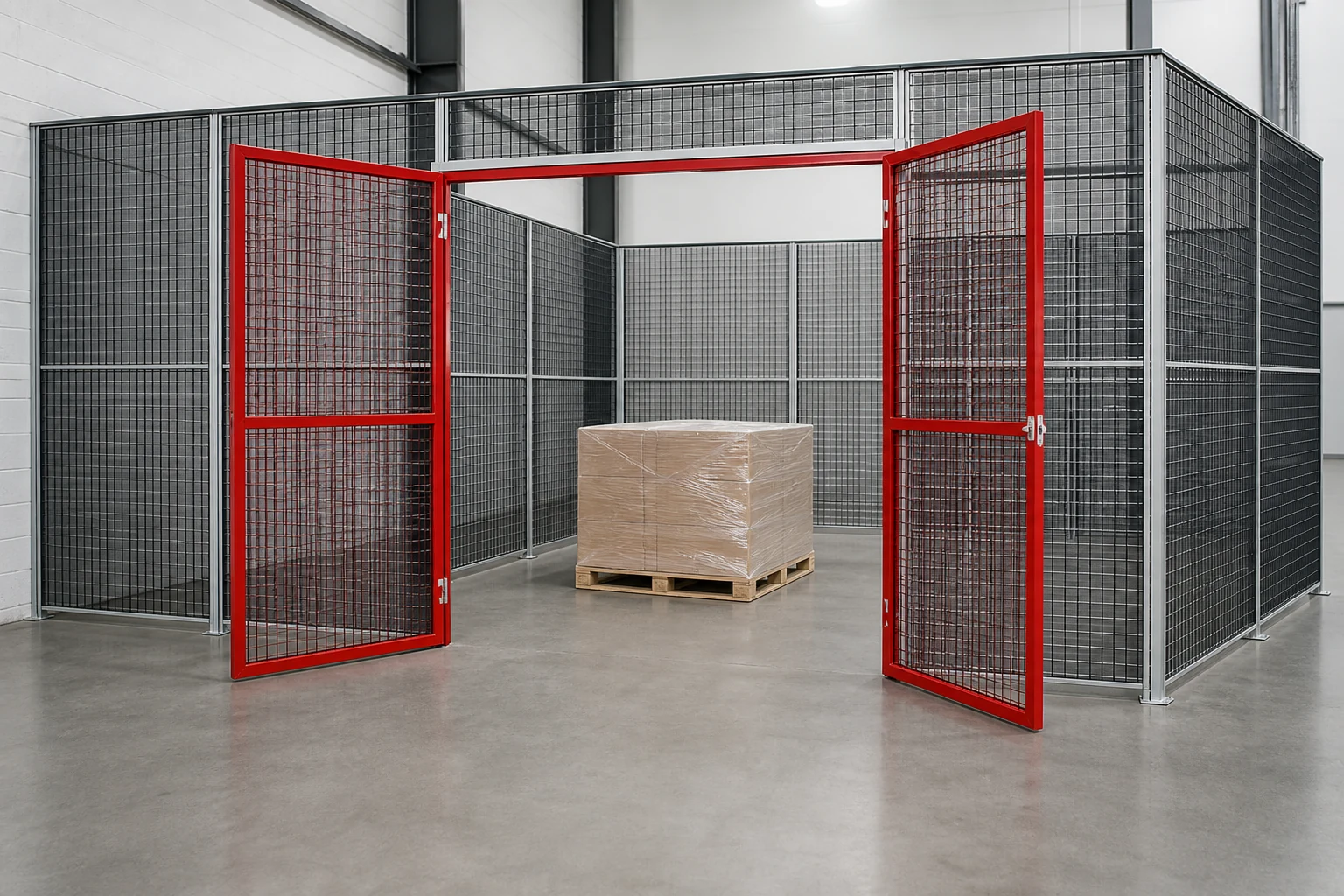
The best warehouse cage designs feel obvious to use. Staff should be able to see where they can enter, understand what the cage is for and move goods through the opening without awkward workarounds. Mesh partitioning helps because it gives a physical barrier while maintaining visibility. Teams can see stock, check whether the area is occupied and spot activity on the other side of the cage.
Double door access adds another layer of practicality. One leaf may be used for everyday pedestrian entry, while both leaves can be opened when larger goods need to pass through. This can help keep the area controlled during routine tasks while still allowing wider access when needed.
It is also worth thinking about what happens immediately inside and outside the doors. A cage entrance should not open into clutter, blind corners or a route where people are likely to pause with goods. There should be enough clear space for staff to approach, open the doors, pass through and close them again without rushing. If the doors are hard to use during normal work, people are more likely to prop them open or bypass the intended route.
Door swing is another practical detail. Depending on the setting, outward opening, inward opening or a different access arrangement may be more suitable. The right choice depends on traffic flow, available space, emergency arrangements and the type of goods being moved. A good design will consider the full movement pattern, not just the size of the door aperture.
Planning the cage around real warehouse routines
A useful warehouse cage reflects how the site actually works. Before deciding on the door size and position, it helps to map the daily routine around the area. Who needs access? How often are goods moved? Are items picked by hand, moved by trolley or handled on pallets? Is access needed by maintenance teams, supervisors, contractors or cleaning staff?
The answers shape the design. A storage cage for boxed consumables may need simple controlled access and good visibility. A cage for larger materials may need a wider opening and a clear approach route. A maintenance store may need access for tools, spares and occasional equipment movement. A quarantine area may need clear separation from live stock, with doors positioned to support checking and release procedures.
It is also sensible to plan for busy periods, not just quiet ones. If the cage supports dispatch, returns, maintenance or production support, access may peak at certain points in the day. Double doors can help reduce delays at those moments, provided the surrounding space is also planned well.
Walkways should be considered as part of the same layout. Partitioning can separate people from handling zones, but cage doors should not undermine that separation by opening into an unsafe or confusing route. For related layout thinking, see the guide to designing safe walkways with partitioning systems.
Security, visibility and control
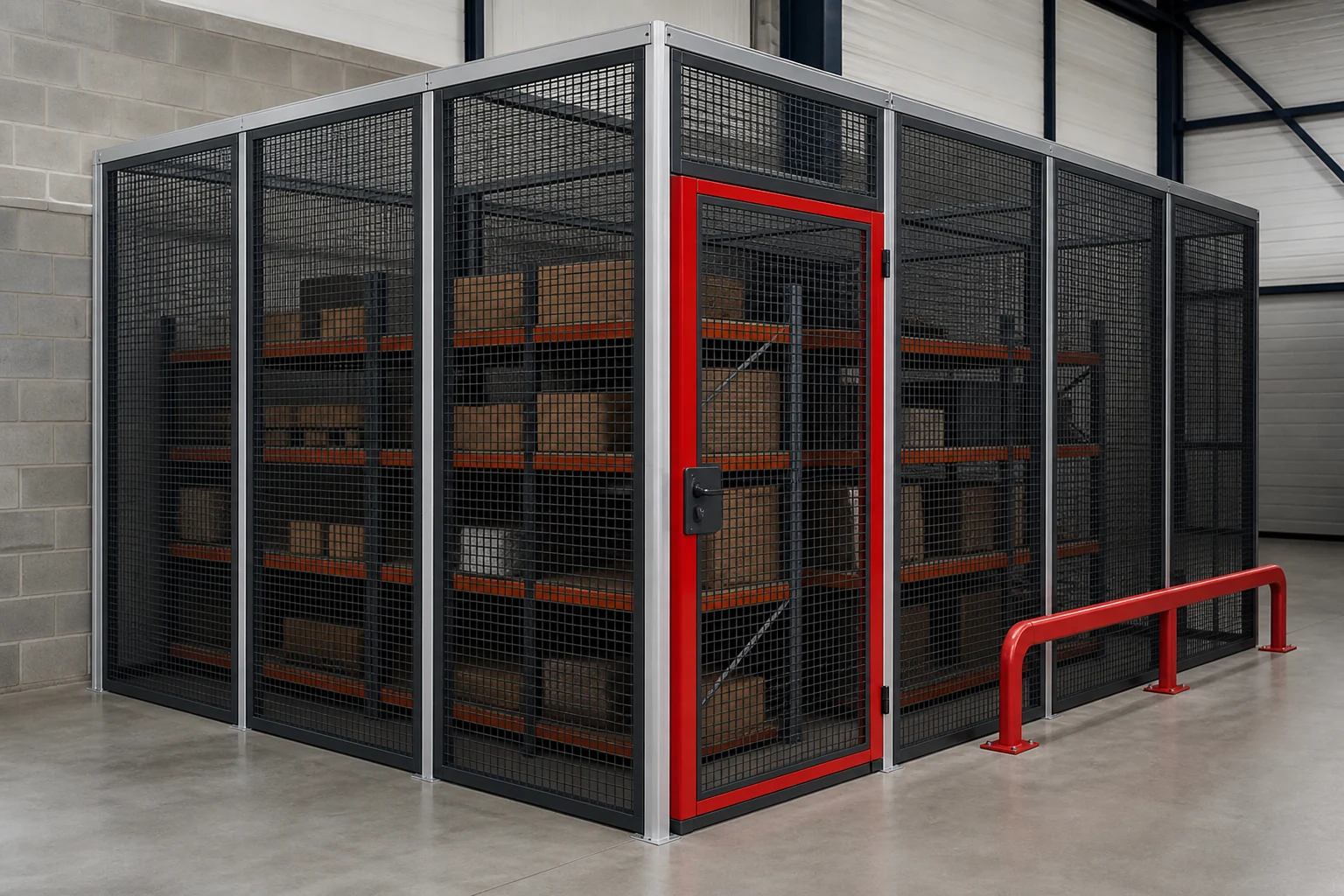
One of the strengths of mesh partitioning is that it does not hide the area away. Supervisors and staff can usually see what is inside the cage, which helps with stock checks, housekeeping and general awareness. This visibility can be useful in busy warehouses where closed rooms would make it harder to monitor activity.
Double door access should be designed so that control is simple. That may mean suitable locking, clear access rules, robust hinges, practical handles and a door arrangement that staff can use without delay. If a cage contains stock that needs closer control, the access point should support that control instead of becoming the weak spot.
The level of security should match the use of the cage. Some areas mainly need separation and visibility. Others need stronger access control because goods are valuable, sensitive, hazardous or business critical. Mesh partitioning can be adapted to suit different requirements, but the intended use should be clear at the design stage.
Good visibility also supports safety. Staff can see whether someone is working inside the cage before moving goods through the doors. They can spot obstructions and check that the access area is clear. This is one reason mesh cages remain popular in active warehouse and factory environments. They create a defined boundary without removing sight lines.
Details that make double door access work well
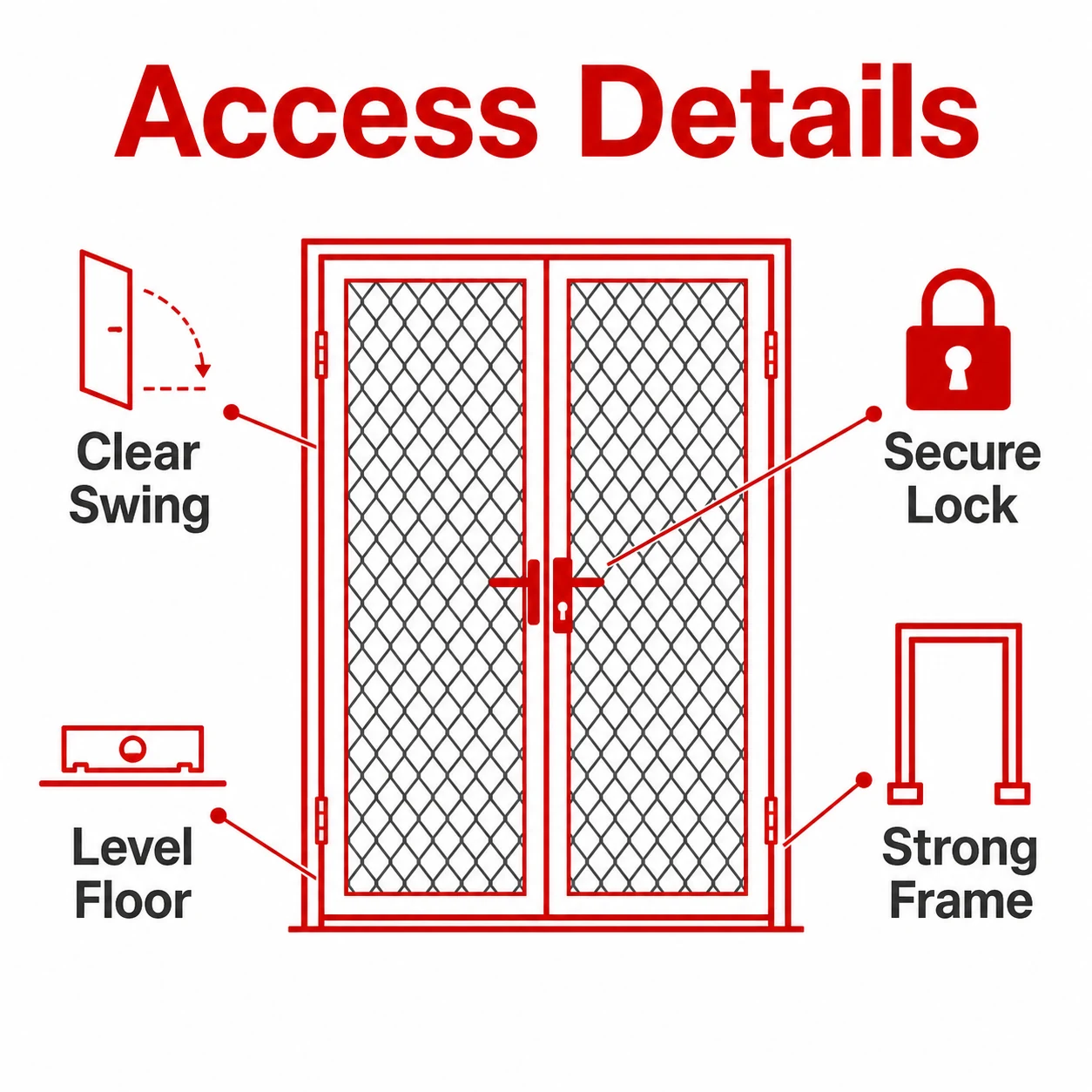
Small design choices can make a big difference to everyday use. The opening width should match the goods and equipment that need to pass through it, with enough tolerance for comfortable movement. The door position should suit the natural route through the warehouse, rather than forcing staff into detours.
Hardware should be practical for the setting. Handles, locks and catches need to be easy to operate with normal work routines in mind. Hinges and frames should suit the frequency of use. If the doors will be opened many times a day, durability and ease of operation are important.
The floor area around the entrance should also be kept in mind. Double doors need space to open fully, and the area should allow staff to stand safely while operating them. Where pallet trucks or trolleys are used, the approach should allow controlled movement without sharp turns at the threshold.
Signage and procedures can help, but they should not have to compensate for a poor layout. The physical design should make the preferred behaviour easy. When the cage access is positioned correctly, sized properly and fitted with suitable hardware, staff are more likely to use it as intended.
If you are comparing options for storage, separation and stock control, the article on the benefits of using storage cages in warehouses gives helpful wider context.
- Double door mesh partition access is useful where wider goods, pallets, trolleys or equipment need controlled movement.
- The door position, swing and surrounding clear space matter as much as the cage size itself.
- Mesh partitioning helps maintain visibility while separating stock, people, equipment or restricted areas.
- Access design should reflect real warehouse routines, including busy periods and who needs authorised entry.
- Security features should match the value, sensitivity and purpose of the goods or area being protected.
Frequently asked questions
What is a double door mesh partition?
It is a mesh partition access point with two door leaves, creating a wider opening than a standard single door. It is often used where staff need to move larger goods, pallets, trolleys or equipment into a secure or separated cage area.
Do all warehouse cages need double doors?
No. Smaller cages used mainly for pedestrian access may only need a single door. Double doors are most useful where the cage must support wider or more frequent stock movement without making the area harder to control.
Can double doors still be secure?
Yes. The security depends on the full specification, including the frame, mesh, locking method, hinges and access procedure. A well designed double door arrangement can improve usability while maintaining clear control of the cage.
What should be considered before choosing the door size?
Consider the largest items being moved, the handling equipment used, the approach route, door swing, nearby walkways and how often the doors will be opened. The aim is to create access that fits the real workflow.
Plan practical mesh cage access
If you are designing a warehouse cage, Billington Safety Systems can help you plan mesh partitioning and double door access around your stock, space and working routines.